The ancient City enjoyed a much higher standard of living than most other parts of the world because of its advanced hydraulic engineering which provided an abundant water supply to its citizens. Most of the water (38 million gallons per day) drained into public fountains, located in open spaces or at street corners (biviis), by way of reservoirs (laci) or jets (salientes). Induced by forces of gravity, the water flowed to the City from surrounding hills through multiple aqueducts, stored in huge cisterns, and
piped to its various public and private destinations. Many houses and villas of the wealthy, of course, enjoyed their own private fountains. Fountains served both practical and aesthetic purposes: during the reign (29 BC-14 AD) of Augustus (he found a city of brick and left it a City of marble), Agrippa, his son-in-law, constructed over 900 such fountains. In the year 33 BC alone, Agrippa bedecked the City with 105. Decorative fountains which beautified public squares had begun to appear already in the late 1st century BC. Growing number of aqueducts fed them, covered frequently
with intriguing designs, often stone masks of animals or mythological figures. Within one hundred years, the City flowed with water delivered by 11 aqueducts and dispersed by 40 ornamental fountains and over 600 public basins. More than 1300 fountains existed throughout the City by the end of the imperial age. Over 300 monumental and decorative fountains scattered throughout piazzas and streets today contribute inestimably to the beauty and charm of the City, as well as to its artistic treasury, making it as much a city of fountains as it is of churches, museums, and historical monuments. No other place in the world can boast of as many water founts as this City. Omnipresent, they appear in public squares, street corners, courtyards, cloisters, and private villas. Its oldest, a spring, the ancient Lacus Juturnae (“Pool of Juturna”) stands in a corner of the Roman Forum. Restored in 1952, it now appears just as it did in the Age of Augustus.

The driving force of the City’s extraordinary and extensive hydraulic system was the aqueduct. What made possible the construction of aqueducts, monumentally large and highly functional structures, was the Roman invention of hydraulic cement.

Greeks had employed cement in their construction, but Roman engineers invented a new formula for it which not only strengthened its bonding properties but, also, made it impermeable to water. By adding volcanic ash from Pozzuoli near Mt. Vesuvius in Naples, instead of sand, to lime and water, they created an extremely strong and cohesive mortar which allowed them to erect structures unequalled in mass and height above or below its surface.

Historians have access to detailed information about the City’s aqueduct system because a Roman official, Sextus Julius Frontinus, wrote two treatises (de Aqaeductu) about the first nine (of 11) of these in 97 AD. Frontinus, an expert civil engineer, served as the administrator of the City’s water supply and his treatise provides specific information about the history, technology, and water quality of almost all eleven of these water sources (Aqua Marcia, Aqua Appia, Aqua Alsietina, Aqua Tepula, Anio Vetus, Anio Novus, Aqua Virgo, Aqua Claudia and Aqua Augusta). Aqua Traiana and Aqua Alexandrina were added to the system after his death.

The Censor Appius Claudius Caecus constructed the City’s first highway (Via Appia) as well as its first aqueduct, the Aqua Appia in 312 BC.

It was an almost totally underground watercourse which extended miles along the Via Praenestina and does not function today, its water source having dried up in the Middle Ages. Ten others followed over the next five hundred years constructed by public officials and emperors (Augustus, Claudius, Trajan and Alexander Severus).
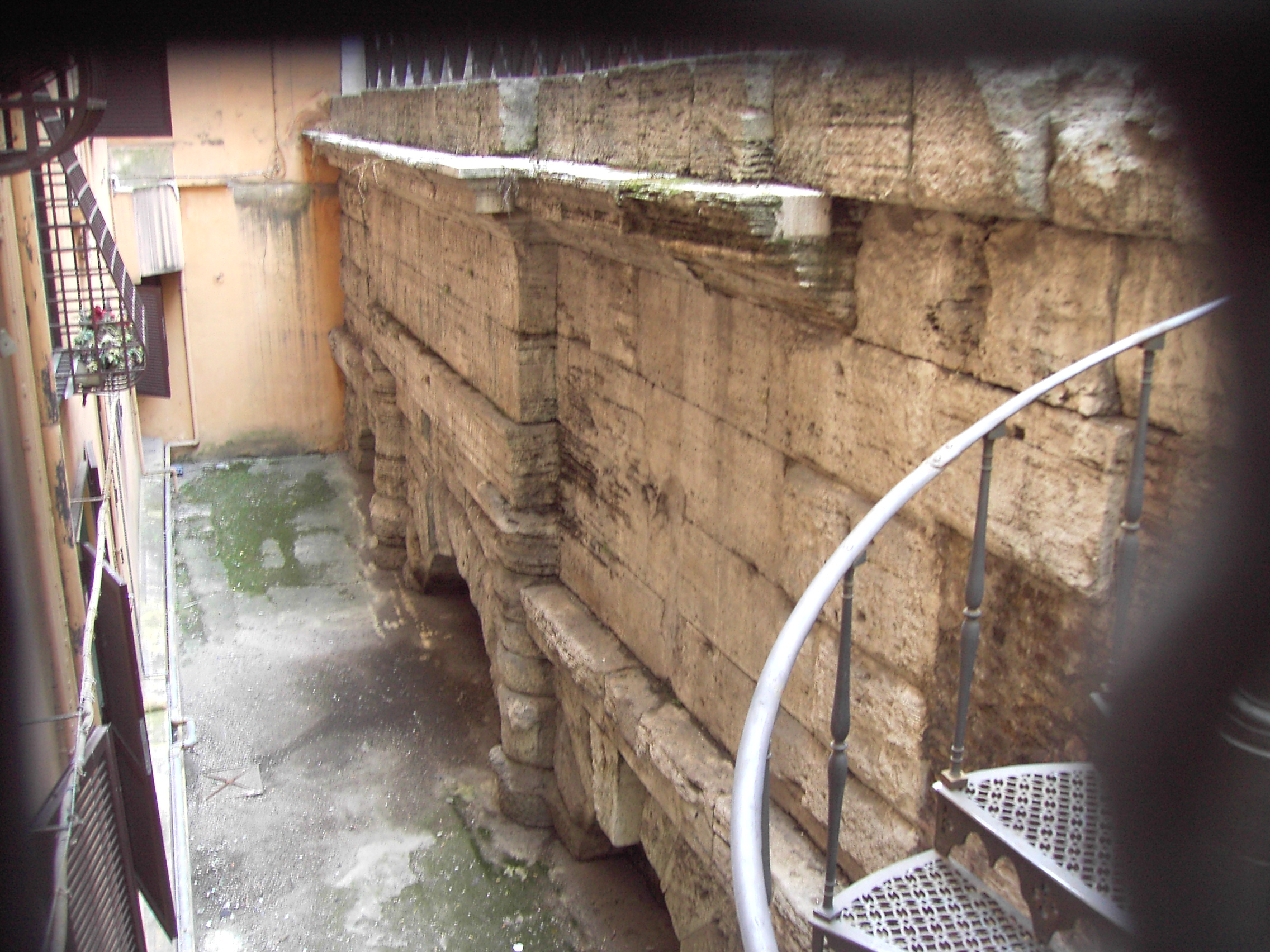
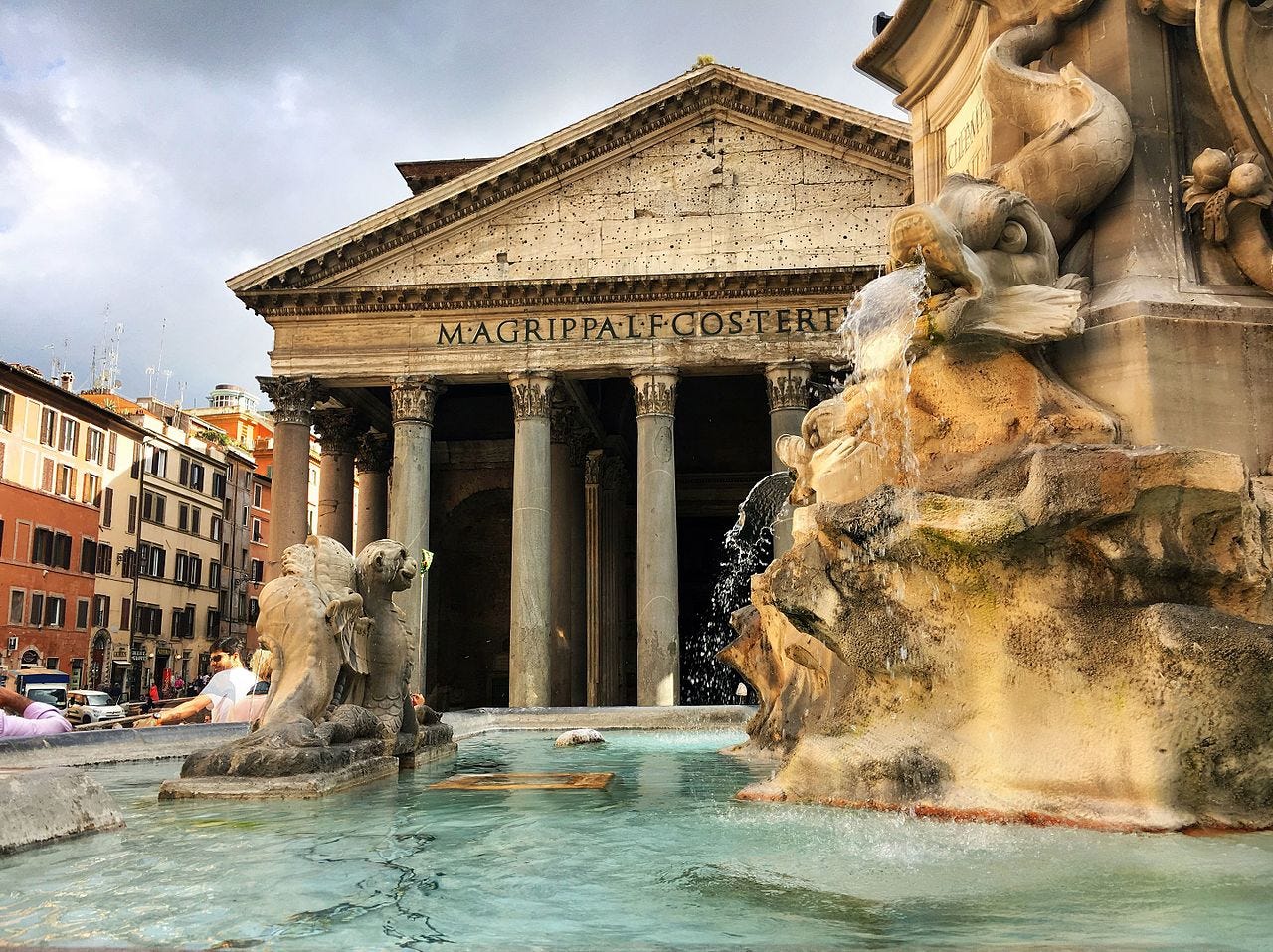
Renaissance popes began the process of their restoration: the Aqua Virgine by Pope Nicholas V in 1453 and Pius V in 1570; the Aqua Traiana (Aqua Paola) by Pope Paul V in 1612. Having completed the restoration of the Aqua Vergine, Pope Pius V set out to create 17 new fountains in the public squares of the City, including those of Piazza del Popolo, Piazza della Rotonda (Pantheon), Piazza Navonna, and Piazza Colonna. This process of aqueduct restoration continued right to the 19th century with the restoration of the Aqua Marcia by Pope Pius IX in 1870. Today the City still acquires its water from aqueducts constructed over two thousand years ago. All have been rebuilt and employ water fed to them by gravity (traditional) or by pumps (modern).

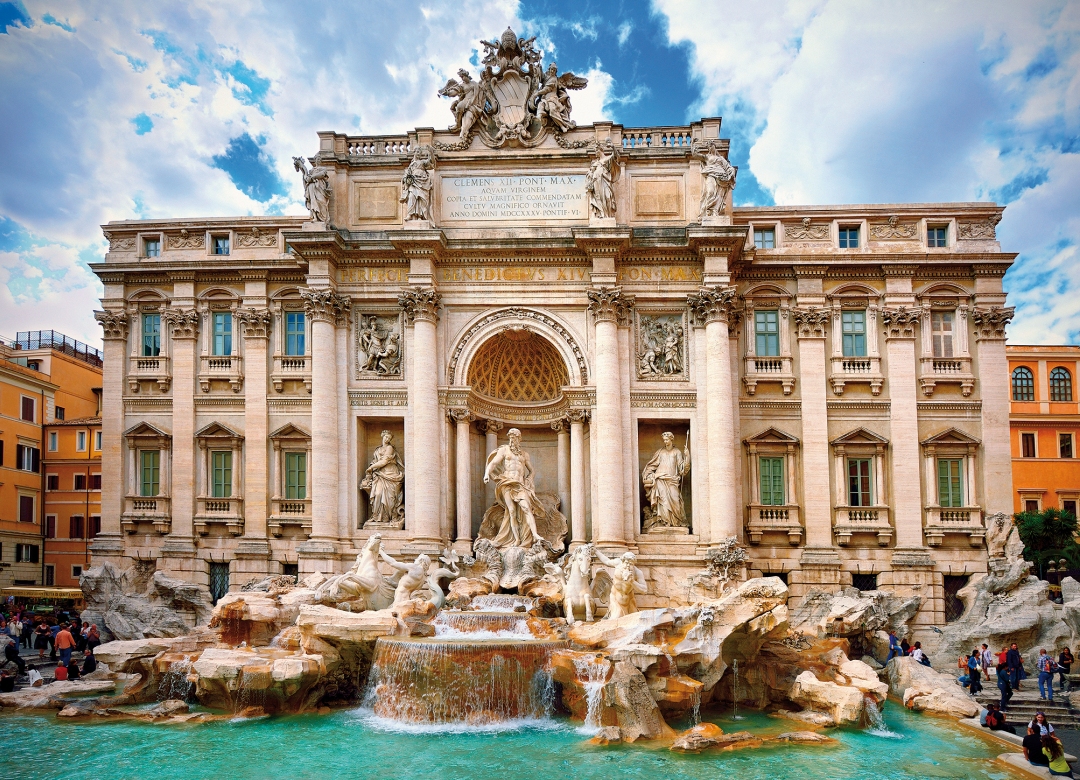
Renaissance fountains tended to be larger, more grandiose, and theatrical than their ancient predecessors. The Golden Age of Roman fountains prevailed in the 17th and 18th centuries, however, when more ancient fountains were restored and Baroque features applied, such that they served as works of sculpture decorated with allegorical figures and animated by flowing water. The best examples of these include Bernini’s fountains in Piazza Navona and the Spanish Steps, the Trevi Fountain, and Paoline Fountain on the Gianculum Hill.

Modern fountains, on the other hand, have lost much of their practical functionality and instead serve mainly as decorative pieces for parks and public squares such as the impressive Fontana delle Naiadi constructed in the late 19th century for Piazza della Republica.

‘Rioni’ (neighborhood) fountains represent a characteristic feature of the City. Rioni consist of 21 local administrative zones whose historical origins derive from the 14 regions established by Augustus in 10 BC. The papacy added another 7 in the Renaissance Age. Each region (rione) has its own unique local history, customs, and festivals. To celebrate and accentuate these, the City government in the early 20th century provided new and picturesque fountains to showcase the unique character of each zone. On Via Straderari, for example, near the old University of the Sapienza, it placed the Fontana dei Libri (Fountain of the Books).

Near the Porta Angelica of the Vatican stands the Fontana dei Tiare (Fountain of the Tiaras).

Legends and stories about fountains abound. One deals with the Trevi Fountain, the City’s most beloved fountain. At the upper right portion of the fountain perches an oddly placed, carved stone vase slightly suggestive of a shaving cup. The legend says that the owner of the barbershop across the street complained often and loudly about the ugliness of the fountain. The architect eliminated the cause of the complaint by adding the cup such that neither barber nor his clientele would ever again set their eyes on the offending complex.