
Despite the pope’s initial and very staunch opposition to employing the City’s most illustrious artist and architect, Gian Lorenzo Bernini, this great artist ultimately designed for Pope Innocent X the strikingly spectacular and beautiful Four Rivers Fountain, one of Rome’s best known and loved public monuments. He created it to serve as the theatrically, dramatic centerpiece for the Pamphilj family compound on Piazza Navona which included Palazzo Pamphilj and the Church of Sant’Agnese in Agone. Regarded by most as the City’s most beautiful fountain, it succeeds as well as it does because of the harmonization it achieves not only with the two campaniles of the church behind it and with the other structures around the piazza and the two fountains at either end. Not coincidentally, the fountain harkens back to the original status of the Domitian’s Stadium and the naumachia (water games) celebrated there. City officials restored the flooding of the piazza on Saturdays and Sundays during the 17th and 18th centuries to amuse the poor and entertain the wealthy. On these occasions an orchestra playing from a raised platform added to the festivities.
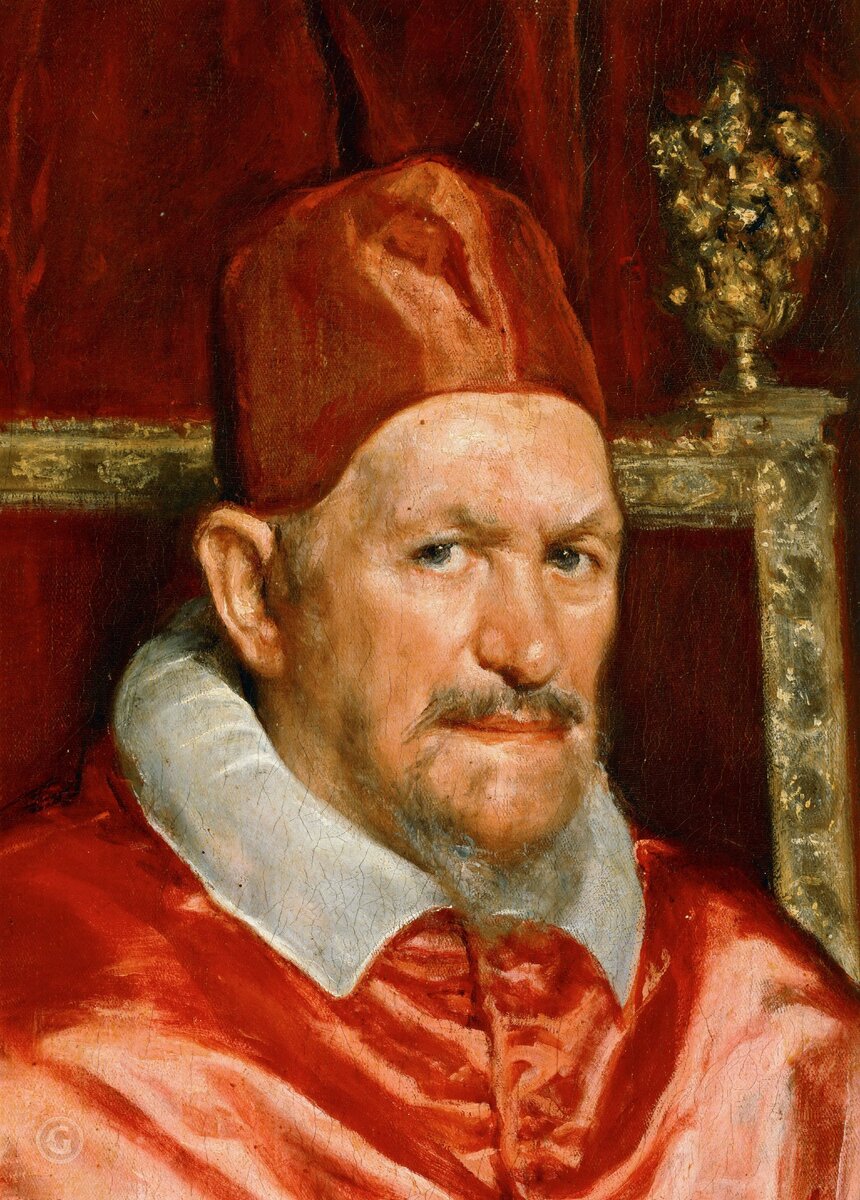
Innocent had solicited designs for the fountain from Borromini and other artists but deliberately avoided Bernini because of the artist’s lengthy ties to Innocent’s predecessor, no friend, Pope Urban VIII. Bernini had famously sculpted the Triton Fountain in the piazza near Palazzo Barberini. Bernini’s friend, Prince Nicolo Ludovisi, the son-in-law of Innocent, asked the artist to cast a model of the fountain, and Donna Olimpia Maidalchini, the pope’s influential and domineering sister-in-law, played a prominent role in obtaining the commission for Bernini. She set the silver model of the fountain so prominently visible in her palace that Innocent could not avoid seeing it. He spotted it, stopped in his tracks, examined it carefully, and immediately summoned Bernini to whom he enthusiastically entrusted the commission. Curiously enough, Bernini borrowed from an earlier Borromini-inspired project-design of a “four rivers” fountain and then ingeniously added to it his own unique and inspired conceit, the towering obelisk.

Four great river gods (Nile, Ganges, Danube, Rio del Plata) seated on large rocks and representing great water sources of four continents (Africa, Asia, Europe, and South America), provide the basic theme of the fountain. Above the river gods Bernini erected a Roman copy of an Egyptian obelisk (54 feet), originally commissioned in the 1st century by the emperor Domitian for the Isis Temple and later expropriated in the 4th century by Emperor Maxentius for his Circus on the Via Appia. The original bore no hieroglyphics on its shaft, but stone carvers later added some to glorify and portray as gods, Domitian and his brother, (Emperor) Titus and to associate their rule with that of the ancient, prestigious, divine, pharaonic rule. The papal coat of arms at the base of the obelisk symbolizes the spiritual power of the church over the City and the world.
Diverse symbols fill and enliven the monument. The fountain itself serves as a metaphor for the Earth, Paradise, and divine grace filling the universe with its light. The obelisk represents the sun’s rays – the rivers, the four corners of the earth. The dove at the top, part of the Pamphylj coat of arms, symbolizes Holy Spirit, wisdom, and the triumph of Christianity over the paganism of the ancient world. All of these allude to the glorious and enlightened rule of the Innocent X papacy and, as well, in the age of the Counter-Reformation, the universality of the Roman Church throughout the known world. The four rivers emphasize the necessity of water as the source of life everywhere. Many, widely diverse, animal types appear throughout the sculpted parts of the fountain reflecting the regions of the world, represented by the four river figures. They symbolize, as well, the ideals of Roman power: renewal in the snake, virtue in the palm tree, intelligence in the elephant.

The Ganges figure carries a long oar and symbolizes the navigability of the river.

The River Nile, head covered, represents blindness. No one at the time of the fountain’s construction knew the exact location of the Nile’s source. Some commentators report, erroneously, that the figure covers its eyes to express Bernini’s disdain for Borromini’s façade in the church of Sant’Agnese.

The Danube, the fountain’s European river, unabashedly displays the Pamphylj papal coat of arms.

The South American river, Rio de la Plata, with its stack of coins signifies the natural wealth of the Americas. The frequently repeated legend that Bernini deliberately posed the Plata figure to say that the statue feared that Borromini’s facade would collapse upon it, does not correspond to historical fact. The fountain actually pre-dates the façade by several years.

Balancing the very heavy obelisk over the void posed Bernini’s greatest challenge which he enthusiastically embraced and successfully overcame. Historians regard it as his professional and psychological response to an earlier architectural disaster for which critics, Borromini especially, held him responsible – the failure of the St. Peter’s bell towers.
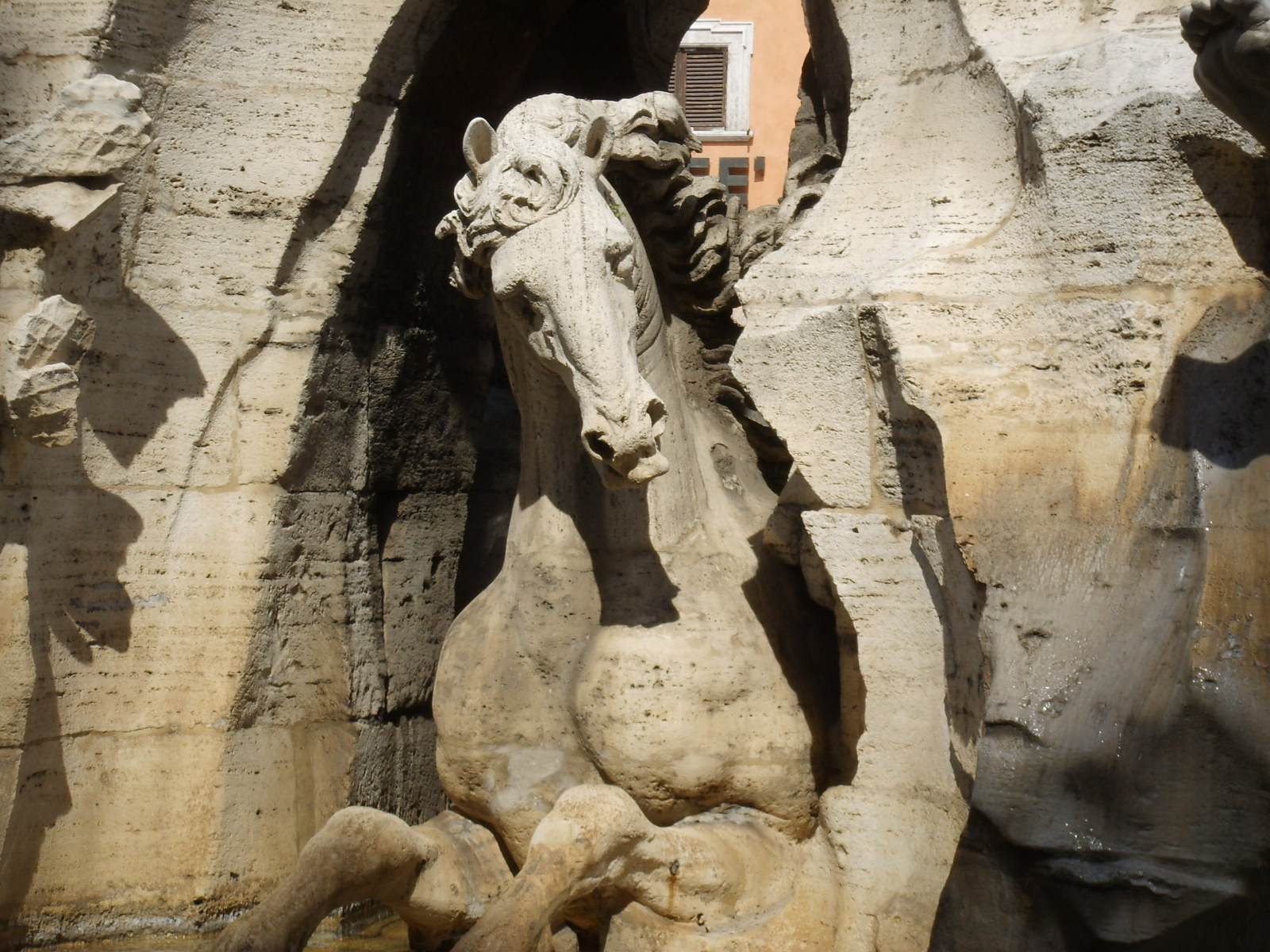
Bernini sculpted the figures of the horse, lion, palm tree and some of the exotic animals all of which, originally, he painted. The fountain featured a drain in the shape of sea monster which, when closed, became a very useful and often utilized tool for flooding the Piazza for water games.
Bernini had carefully planned its inauguration. Throughout the construction he had kept the project secret from the public by covering the workspace with elaborate scaffolding. When the curious crowd of gawking onlookers gathered for its unveiling and inauguration in June, 1651 and stood stupefied by the grandeur and virtuosity of Bernini’s effort. Pasquino, however, not so moved, especially in view of its 30,000 scudi cost, had this to say about the fountain: “This obelisk in Piazza Navona was consecrated for all eternity by Pope Innocent (X) at the expense of the innocent”. Despite the enthusiastic response of much of the public, the artist, according to his son Domenico in his father’s biography, regarded it as his most personally disappointing work. Whenever Bernini passed by it in his carriage, said Domenico, he could not bear to even glance at it, and would avert his eyes.
