
One of the City’s best known and most historically beloved figures still
speaks out, Pasquino, the name of the eponymous statue located in
Piazza Pasquino behind Piazza Navona on the southwest corner of the
Palazzo Braschi (Museo di Roma). The 3rd century BC statue unearthed in
1501 near Domitian’s stadium (Piazza Navona) in 1501 seems, according
to art historians, to represent the figure of Spartan King Menelaus, a
prominent figure in the Trojan War. Originally part of an earlier cluster of
statues, it portrays the king, holding in his arms the body of Patroclus, a
hero of the Trojan War and friend of Achilles.
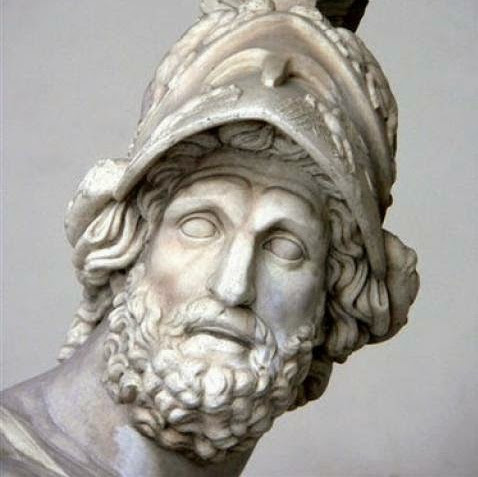
Oliviero Carafa, a powerful cardinal, friend of popes and kings, patron of the arts, and relative of Pope Paul IV, owned Palazzo Braschi. He purchased the sculpture, had it mounted on a pedestal on the side of his residence on Via del Governo Vecchio, and draped the statue adorning it with Latin epigrams honoring St. Mark the Evangelist on his feast day, April 25. Thus began the storied career of Pasquino, first of the City’s ‘talking statues’, who gained great notoriety in the early 16th century as one of the most popular political commentators and satirists of his age.

Neighbors, unhappy with the state of affairs in the City, took the cardinal’s lead but, instead of religious epigrams, regularly posted on the statue anonymous, pointed and acerbic criticisms directed at government officials during an age of rigorous censorship. It served as a bulletin board for the aggrieved of the neighborhood and a regular voice of public, witty, and, often, facetious, commentary. The English term “pasquinade” refers to anonymous and satirical verse or prose derived from this Roman tradition. The name, “Pasquino”, probably originates with a 16th century neighborhood tailor renowned for his biting wit and sarcasm directed at the foibles of the ruling class of the City. His posthumous legacy continues to this day through the statue. Other talking statues quickly sprang up throughout the City and formed a kind of academy of interlocutors, a ‘Congresso degi Arguti’ (Assembly of Wits), with Pasquino as speaker bantering with the others, (Marforio, Abbate Luigi, Madama Lucretia, il Facchino, and il Babuino), in on-going conversations about current events of mutual interest. In one such dialogue, Marforio asked Pasquino what he was doing (‘che fai’) and Pasquino responds, ‘I’m just keeping guard over the City to be sure that it doesn’t move to Urbino (Pope Urban VIII). When Pope Hadrian VI (1522-23) ordered the statue tossed into Tiber, he changed his mind when wisely advised not to do so, because “like frogs, Pasquino would croak a lot louder in the water’. In the late 16th century when the great builder pope, Sixtus V, was raising taxes on many commodities, Marforio asked Pasquino why he was hanging his laundry out to dry at night. Pasquino’s reply was, given the way the political winds were blowing, he’d have to pay taxes on the sunlight if he did it during the daytime.

Michelangelo incorporated the image of Pasquino in the face of the old man carrying body of his son, on the Sistine Chapel ceiling panel of Noah and the Flood.

When asked what he thought was the City’s best sculpture, Bernini allegedly, and probably with tongue in cheek, replied that he regarded Pasquino the most admirable sculpture of all.

Its many, memorable, and widely recited witticisms include the following: about Julia Farnese, mistress of Alexander VI: ” bride of Christ”; about Pope Leo X (Protestant Reformation): “Pope Leo was dying, but where was the sacrament? He sold it long ago”; about Pope Paul V as fountain builder: ”Fontifex Maximus”; about the Four Rivers Fountain in Piazza Navona: “this obelisk in Piazza Navona was consecrated for all eternity by Pope Innocent (X) at the expense of the innocent”; about Urban VIII (Barberini): “quod non fecerunt barbari fecerunt barbarini” (what the barbarians didn’t do, the Barberini (pope and family) did); about Pope Urban(VIII) who stripped travertine from the Colosseum for the construction of St. Peter’s : “he undressed Flavius (the Colosseum) to dress Peter (the basilica)”; about Pope Urban VIII who put a tax on wine to repair the Trevi Fountain: “after 1000 taxes on wine Urban now refreshes Rome with plain water”; about the notoriously avaricious Olympia Maidesclachi, sister-in law of Pope Innocent X: “olim pia, nunc impia” ( pious once upon a time, but now impious); about Adrian VI when he died; ” from the Senate and the Roman people to the Liberator of the City, (dead Pope’s physician), garlands and flowers”. Although the chatter among the City’s talking statues has long since disappeared, signs and posters, usually of a political nature, still appear regularly affixed to Pasquino’s base. More recently, during Virginia Raggi’s term as City mayor (2016-2021, first female mayor in its history), when trash was piling upon the streets in age of Covid, one sign appeared with the plea: “Virginia. Clean me up”.
