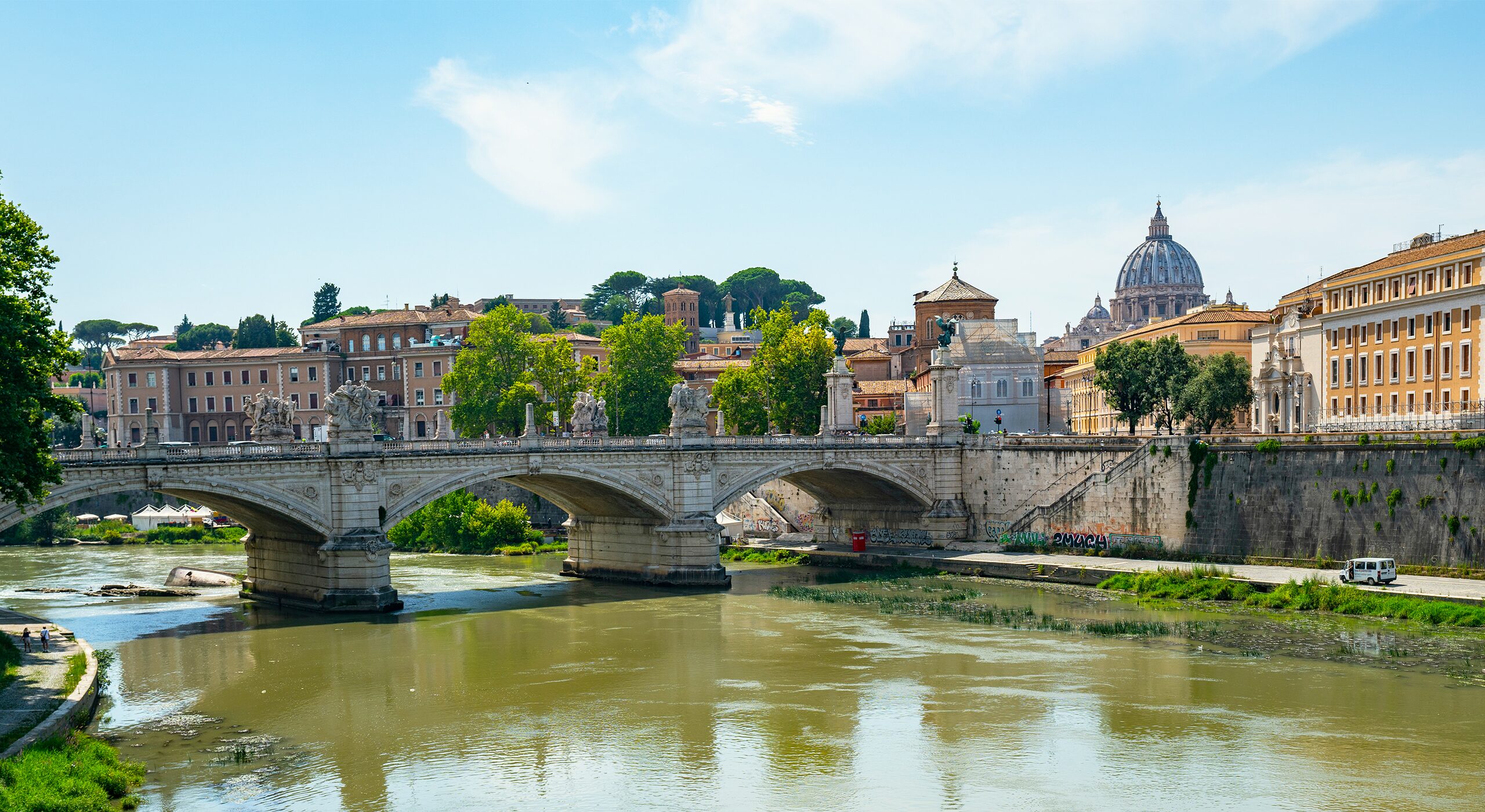
Campo Marzio boasts of the City’s oldest and most interesting extant palaces and residential apartments, Medieval and Renaissance. Because it has been continuously inhabited for a millennium and a half, the Campo retains many of its original features making it, virtually, the historical center of the City. Some contemporary buildings occupy ancient ones (Camera di Commercio in Temple of the Deified Hadrian) or are set upon their foundations (Senate over the Baths of Agrippa). Most streets follow along the same course as their predecessors and the area is dotted with small hillocks (monti), source of their local names then and now (Montecitorio).

For hundreds of years Campo Marzio stood isolated, an open plain, and until they were driven out of the City, the private domain of Etruscan rulers. Because it stood outside the Servian wall, within which soldiers could not officially gather, it became the place where they could congregate and practice drills. The general population also used it for gymnastic and recreational activities. Its broad green space covered the area from below the Capitoline Hill to the River Tiber, and on to the Quirinal and Pincian Hills. The Romulus myth holds that from here, the City’s founder rose to the heavens caught up in an irresistibly powerful whirlwind (apotheosized) where he resides now on Mt. Olympus, recognizable as the god, Quirinus. During his 50-year rule (21 April 753 Ab Urbe Condita), legend credits Romulus with establishing the Senate, the pantheon of the gods, and legal customs dealing with civil and property rights. Caesar and later Augustus first initiated development of the region as part of the City.

Augustus especially initiated major administrative changes throughout the entire City. He increased the number of districts, rioni, (regions) from four to fourteen, and divided these into quarters, each with its own set of officials (aediles, praetors, tribunes, and others), a number which held throughout much of the Middle Ages. These were increased to twenty-one during the rule of the papacy. The modern City has twenty two municipal rioni.

Each region had its own name, boundary lines designated by marble wall markers and, typically, a signature fountain depicting a feature characteristic of the specific zone.

Augustus intended to utilize the space for leisure and entertainment of the general population, and so, constructed theaters, arenas, and porticos such as the Theater of Balbus (10,000 spectators) and the Theater of Marcellus (30,000 spectators). His close associate and son-in-law, Marcus Agrippa, rebuilt the Pantheon and added allied structures – temple, baths, and lake. Even after the so-called ‘fall of Rome’ in 476 AD most of the Roman population resided in spaces surrounding the Fora and Colosseum areas. An Ostrogothic army in 537 AD broke its siege of the City by destroying the major channels of aqueducts like the Aqua Claudia. The water supply which inhabitants depended on for its fountains and reservoirs came to a sudden and pitiable end. For the next fifteen hundred years, Campo Marzio gradually emerged as the residential area of the City because of easy access to an abundant water supply via the Tiber River, “regina aquarum” (queen of the waters), as the Romans nicknamed it.

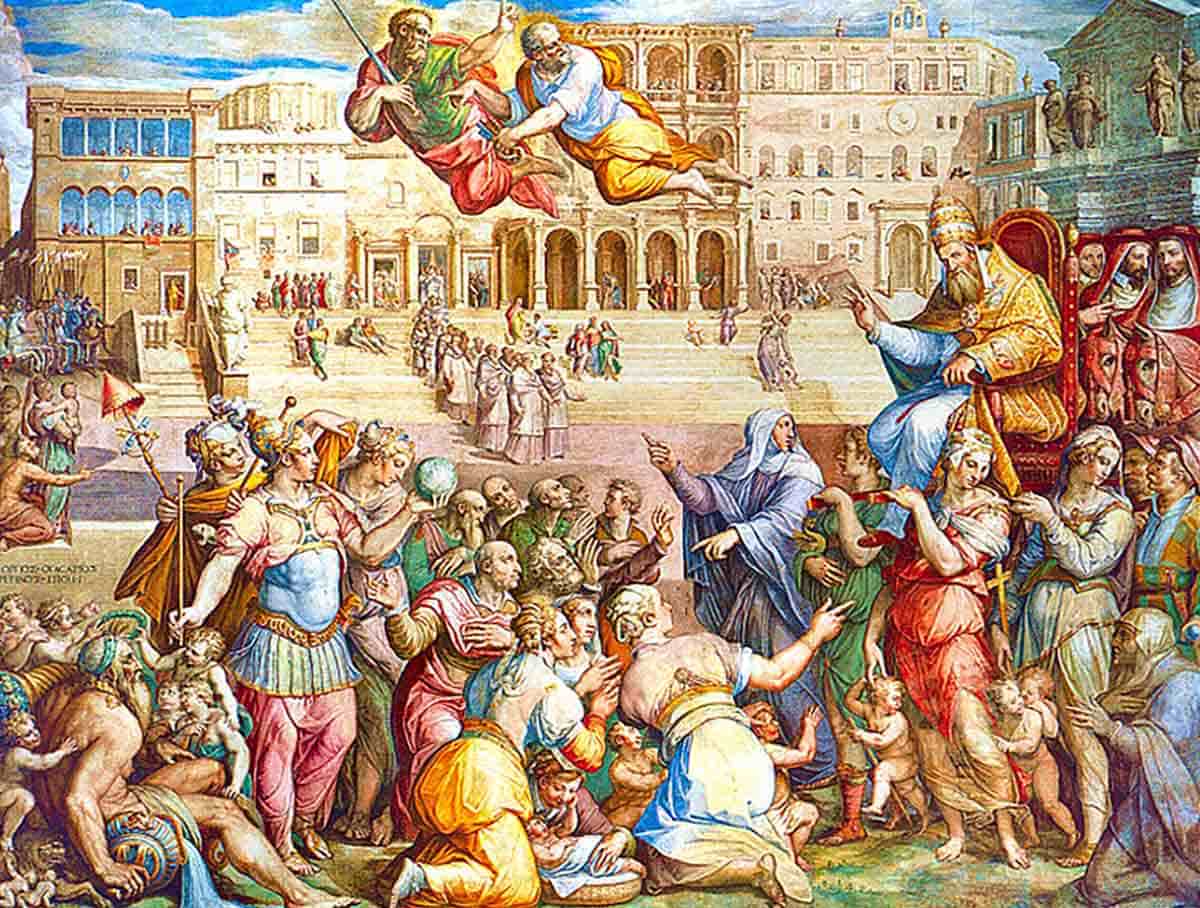
In 1305 a French cardinal, Bertrand de Got, became Pope Clement V but never took up residence in Rome. He transferred in 1309 the papal court to the French city of Avignon, technically, at the time, a part of Kingdom of Arles. Succeeding popes remained in Avignon until Pope Gregory XI returned to the City in 1377 and set up residence, not at the Lateran because of its decrepit state, but, instead, at St. Peter’s, where subsequent popes have remained till now. The proximity of the newly established papal court to Campo Marzio across the Tiber immediately stimulated commercial activities and construction projects of all kinds. Grand papal initiatives encouraged continuous development of the entire area throughout the Renaissance period: the Via Lata (Via del Corso) by Pope Paul II; the river roads of the Via Giulia and Via della Lungara by Pope Julius II; the Via Leonina (Via di Ripetta) from Ponte Sant’Angelo to Piazza del Popolo by Pope Leo X; the restoration of the Vergine Acqueduct by Pope Pius V. The center of the City had, in the blink of an eye and de facto, shifted from one section in the south to another in the north. To this day it remains a maze of narrow streets lined with palaces, shops, boutiques, coffee bars, pizzerias, churches, restaurants, and small piazzas.
When the City became the capital of the Italian State in 1870, government engineers immediately moved to create high embankments along the Tiber. These succeeded, for the first time in history, in preventing the predictable seasonal flooding which had plagued it for over two millennia.