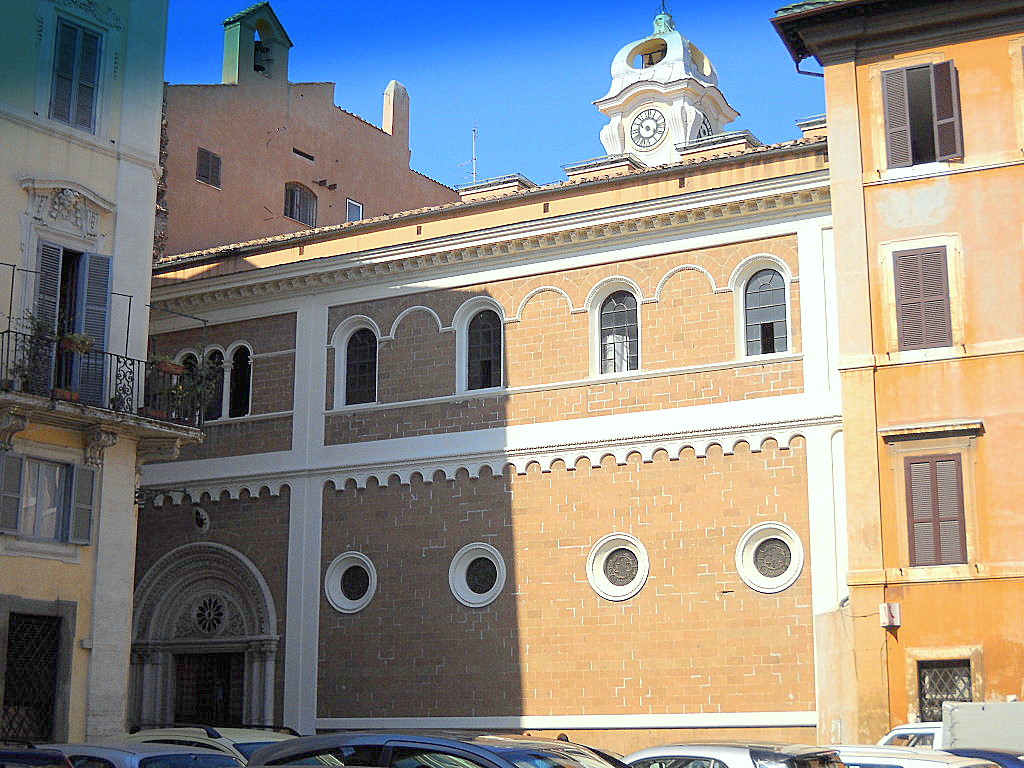
The more than amply justified epithet, Venerable, pertains to the English College on the Via Monserrato, a narrow street which runs into Piazza Farnese on the right side of the Palazzo. The “Venerabile” long stands as the seminary in the City established to form and educate Roman Catholic seminarians who one day will minister as priests in the dioceses of England and Wales. It distinguishes itself, interestingly, as the oldest extant British institution outside of British Isles. English residents in the City built the original structure in 1362 for English pilgrims to replace an older 8th century hospice in the Anglo-Saxon quarter near St. Peter’s. They founded this new hospice, they said, because of “English pride, English piety, and English distaste of being fleeced by foreigners”. The institution enjoyed immense popularity with English visitors to the City such that King Henry VI assumed its patronage. Under the protection of a superintendent appointed by the Crown, it gradually acquired the moniker ‘The King’s Hospice’. Various Plantagenet kings’ coats of arms remain visible still in some rooms of the building. When Cardinal Christopher Bainbridge, England’s Ambassador to the Holy See under King Henry VIII died suddenly in the City in 1514, poisoned by his own steward, officials entombed him here in a monument marked by a white marble memorial slab, resting on a base supported by two lions.

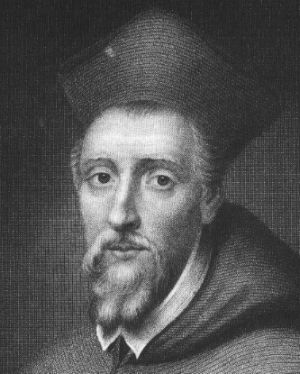
In 1532 King Henry VIII separated England from the Catholic Church. The religious situation for Catholics became more perilous with the passage of time and many fled the country. The English expatriate, Cardinal William Allen, acquired the hospice in 1576 and three years later obtained permission from Pope Gregory XIII to transform it into a national seminary for priestly formation of English clergy.
Gradually the College acquired the title “Venerable English College” after many of its students died as martyrs for practicing their Roman Catholic faith England during the 16th and 17th centuries. Emblazened on its College coat of arms reads the motto “I have come to spread fire over the land”. In 1970 Saint Pope Paul VI canonized Forty Martyrs of England and Wales, many of them alumni of the College.

The College building includes the Church dedicated to St. Thomas of Canterbury. Its foundations originate from the chapel erected for the Hospice around 1376. Cardinal Allen constructed a new church on the footprint of its predecessor in 1579. In the 17th century most of the College and church were rebuilt and included the construction of the campanile attached, not to the church itself, but to a wing of the seminary. The church consisted of a square structure, divided by a nave with a carved ceiling and
two side aisles, all destroyed by French troops during the Napoleonic occupation of the City in the early 19th century, and replaced in 1866 by the current church. The altarpiece, a 16th century painting of the Holy Trinity by Durante Alberti, survived the despoliation. The façade, composed of brown brick, is divided into four unevenly spaced zones, separated by vertical and horizontal lines. It contains windows of diverse shapes and sizes and lacks compatibility with its surroundings. Over the Romanesque doorway rests a tympanum and small round window.

The plan of the very simple church consists of a broad nave with two side aisles over which set “matronea”, balconies for female Mass attendants.

Prominently displayed in the church is Durante Alberti’s 16th century altarpiece “The Martyrs’ Picture”. Not surprisingly, it depicts the Blessed Trinity and two prominent English martyrs: Thomas Becket, archbishop of Canterbury and Edmund, King of East Anglia, England’s first patron saint. On December 1, “Martyrs’ Day”, officials of the College celebrate Mass to commemorate the lives of the martyrs and to venerate their relics preserved below the altar.

In back of the courtyard, the central part of the College complex, rises a small, but attractive, Baroque campanile (belltower) restored in the 19th century. Supporters of Napoleon Bonaparte ransacked the College in 1808 and used it as a police barracks until the seminary reopened in 1818. During World War I it served as a hospital directed by the Knights of Malta. Throughout its history the College has provided hospitality to many important English dignitaries including ecclesiastical figures, representatives of the crown, scientists, and poets. Notables such as Thomas Cromwell, William Harvey, Thomas Hobbes, John Locke, and John Milton spent time at the College. Even members of the current British royal family have paid visits to the College in recent years, including Prince Charles in 2017 (crowned King Charles III in 2022).

In 1979 the newly elected Pope John Paul II paid a visit to the College. He remarked cordially to the staff and seminarian residents that he happily welcomed this, his “second visit”. His words referenced his unsuccessful attempt many years earlier, when he was a young priest-student at the Angelicum University, to find lodging at the “Venerabile’.
.jpg?)
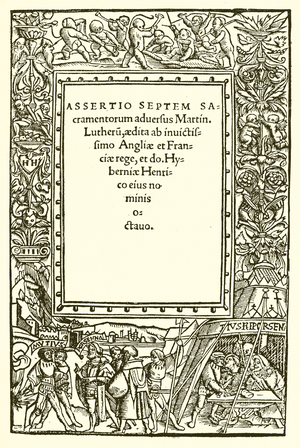
Among the unique treasures the College houses today, stands out particularly the original manuscript of Henry VIII: “Assertion of the Seven Sacraments against Martin Luther”.