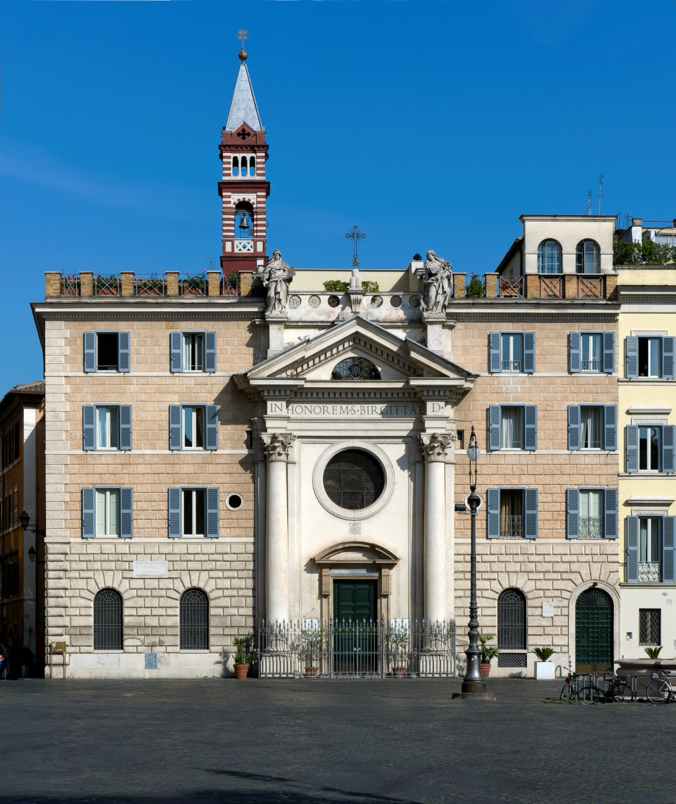
Petite, colorful, and embedded within a larger structure, Santa Brigida is one of several active convent churches in the City. Its origins reach back in time to St. Bridget (1303-1373), Sweden’s most celebrated saint, declared by Pope John Paul in 1999 the patroness of Europe.
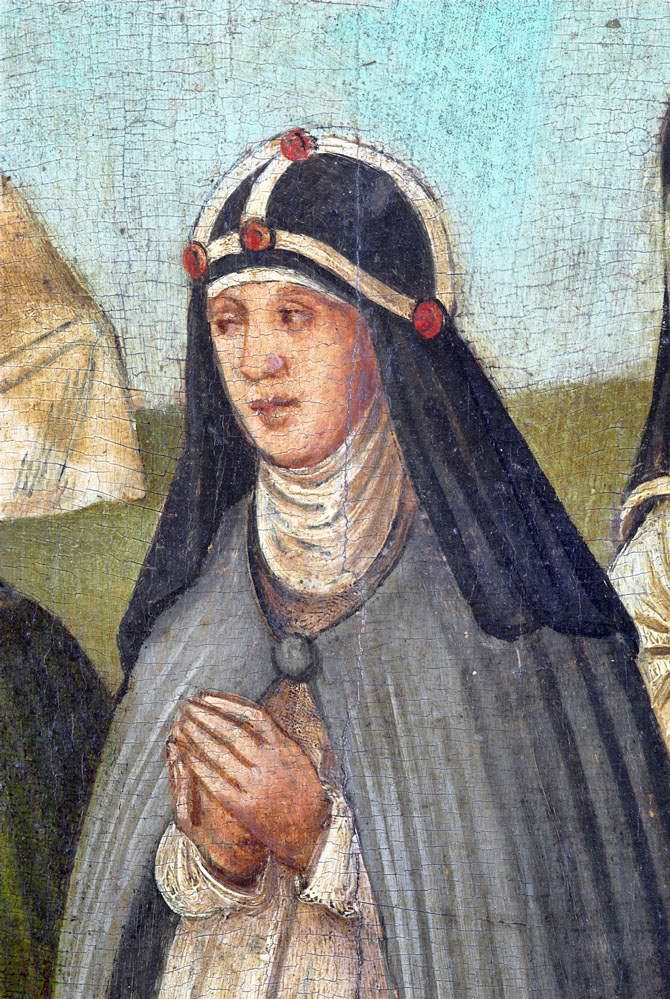
This widowed, Swedish noblewoman, a relative of the royal family, travelled to the City with her daughter, Catherine, during the Jubilee Year of 1350. They hoped to gain from Pope Clement VI approval for a monastic community Bridget had established in Sweden. Both remained in the City actively promoting ecclesiastical reforms and, eventually, they founded a hospice for Swedes and other northern Europeans fleeing Protestant persecution in their native lands.

A century and a half later, in 1513, the highly regarded Renaissance architect Donato Bramante constructed this neo-classical church over the former residence of the two Swedish saints: Bridget canonized in 1391 by Pope Boniface IX, and Catherine in 1484 by Pope Innocent VIII.
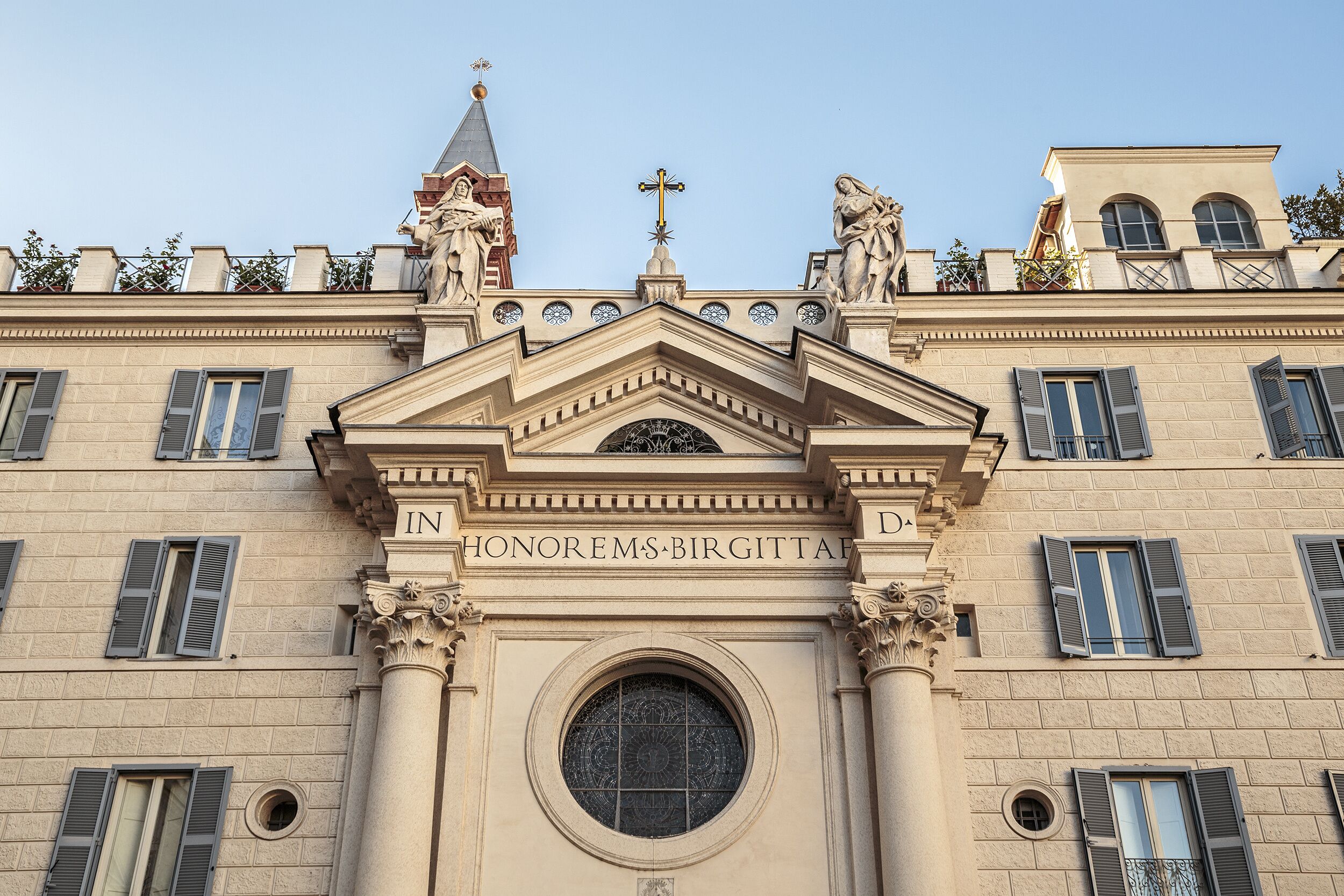
Bridgettine priests acquired the complex in 1692 and restored the church in an Italian Baroque style under the patronage of Cardinal Francesco Albani, later elected pope, Clement XI, in 1700. They added the two statues of Saints Bridget and Catherine to the cornice of the façade.
During the Napoleonic Age in the early 19th century, when French occupiers forced the priests to leave the premises, Pope Leo XII entrusted, the convent and church to the Canons of Santa Maria in Trastevere who, in 1855, leased it to the newly founded Congregation of Holy Cross.

The Holy Cross Priests and Brothers renovated the church and established in the convent both the Procure for the Congregation and a house of studies for its seminarians. Holy Cross refurbished the rooms of St. Bridget and the church interior and restored the sanctuary, altar, and floor. In the two windows above the main altar (no longer in place), they installed the coat of arms of St. Bridget together with that of the Holy Cross Congregation. When the Holy Cross community left Santa Brigida in 1892, the property passed to the Carmelite Sisters of the Most Holy Sacrament. A re-founded congregation of Bridgettines established by St. Elizabeth Hesselblad acquired the complex in 1911 where they remain to this day.

The church lies inside the larger convent structure. In the center of the narrow, 18th century façade, with tall composite columns at each end, stands out a colorful, large oculus, a stained-glass window which portrays the Holy Spirit in the form of a dove. Below it, the Baroque styled, single, framed doorway gives definition to the whole façade. Above the portal lies a lintel with a dedicatory inscription in Gothic lettering. A petite, Romanesque, campanile (bell tower), lined with white stripes was added later in the 19th century.
A colorful interior abounds with richly decorated appointments, including the Farnese family crest, the fleur de Lys, which underscores their loyal and lengthy patronage of the church and convent. One of these emblems lies at the bottom of the holy water font on the right side of the entrance. On its wall hangs a copy of the crucifix belonging to the saint. A painting of Veronica’s Veil and stained-glass windows depicting the Sacred Heart of Jesus and the Immaculate Heart of Mary sit above the altar. The Chapel of St. Catherine of Sweden, reserved for the cloistered sisters, looks on to the main altar from the left side of the church.
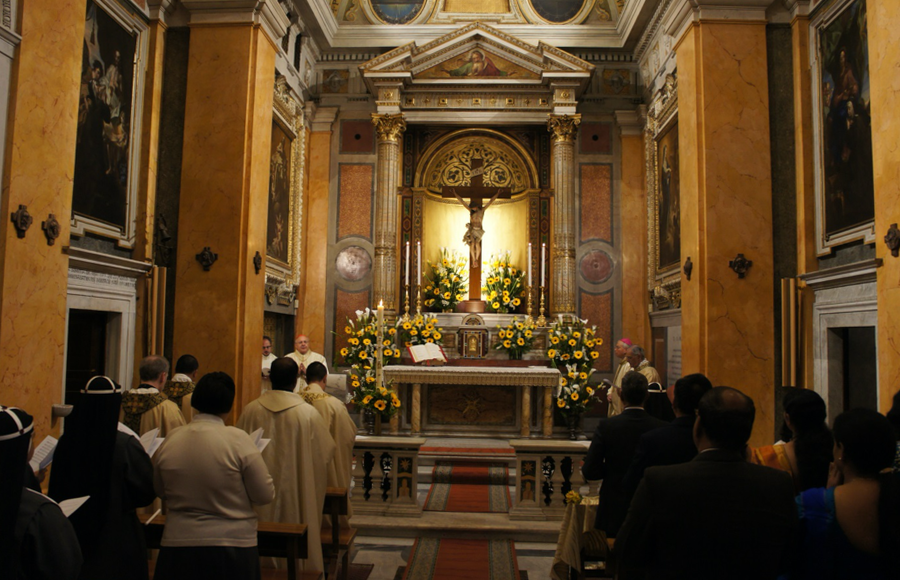
Since 1972, the Bridgettine community, in an ecumenical gesture to Swedish Lutherans in the City, has provided the crypt below the church as a chapel for their community. The Evangelical Lutheran Church of Sweden holds services there on Sundays and Thursdays.
