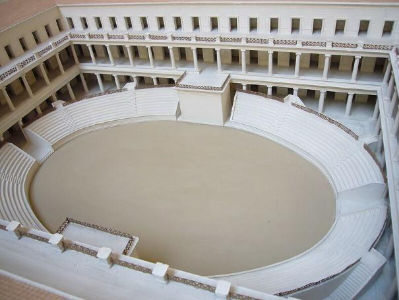
Gladiators lived, ate, trained, and practiced for gladiatorial contests in the Colosseum at the Ludus Magnus. Constructed during the reign of Emperor Diocletian, it represents the largest of the four gladiatorial schools in the City. Located east of the Colosseum, it included an underground tunnel linking it to the amphitheater. Because it enjoyed its own arena which held 3,000 spectators, the public could attend the training sessions in anticipation and preview of games in the amphitheater.
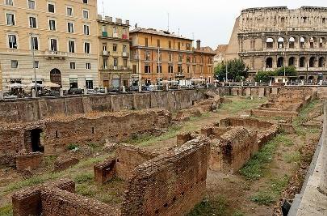
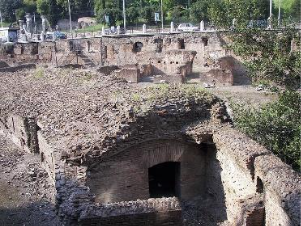
This large complex consisted of a three storied gladiator barracks, colonnaded courtyard, arena, seating section for spectators (cavea), gladiator barracks, and underground storage areas. Remains of it are visible today near the Colosseum on Via Labicana. Other buildings nearby were linked to the games: a training school for gladiators, storage places for weapons and machinery, a facility to treat wounded gladiators and a mortuary to dispose of the bodies of dead gladiators. Three other outbuildings surrounded it: a depository for weapons, stables for animals, and storage for equipment such as roof awnings (velia).
Two blocks away from the Ludus Magnus, Notre Dame University’s Rome Center is located at 15 Via Ostilia. The Center represents one of its two facilities which make up its extensive Rome Program: the Center houses its research and classroom building while its residential component, the Villa on the Celio, stands a stone’s throw away. Both facilities are set within walking distance the Colosseum, the Fora area and the City’s historic center.
