
One of the City’s most interesting and publicly accessible private palaces, Palazzo Doria Pamphylj, stands next to the Bonaparte palace at the corner of the Via del Corso and the Via della Gatta. Built for Cardinal Fazio Santorio in 1507 over Caesar’s and Agrippa’s Saepta Julia (plebeian voting center), Pope Julius II later confiscated it and gave it to his own nephew, Francesco della Rovere. Over the course of time it was acquired by several aristocratic families (Aldobrandini, Landi, Pamphilji, Doria) all united through marriage. This huge structure, unusually, incorporates facades located on three sides of the palace, one on the Collegio Romano side (picture gallery entrance) designed by Pietro da Cortona

Many attribute the design of the courtyard to Bramante.

The palace for many years has housed the Doria-Pamphilj art collection. While the palace continues to serve their personal residence, the Doria Pamphilj family opens part of the gallery to the public. It remains one of the City’s largest privately owned art collections, made up of diverse artworks and furniture assembled by the family for almost four hundred years, including the contents of the palace of Pope Innocent X in Piazza Navona, bequeathed to his nephew Camillo Pamphilj.

Some of the great masterpieces in the collection include Velasquez’s Portrait of Pope Innocent X. Legend has it that when asked whether he thought the image was lifelike, the pope replied, ‘troppo vero’ (too much so).

This wonderful collection possesses works by the most notable artists of the Renaissance and Baroque periods, not the least of which includes Bernini’s sculpted bust of Pope Innocent X.

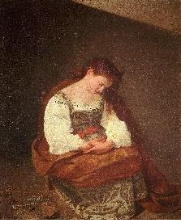
Besides works by Filippo Lippi, Titian, Raphael, the collection boasts of three Caravaggio paintings: the Flight into Egypt, John the Baptist, and Mary Magdalene.


Despite the grandeur of the exterior, like most Roman palaces, the ground floor of the Palazzo houses boutiques and shops of diverse sorts, and, as well, upper floors of apartments rented out to tenants, traditions handed down from earliest times and a common practice in the City.
