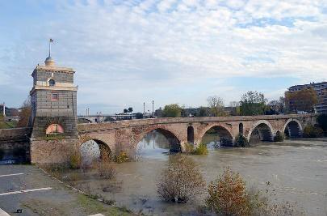
The Tiber River itself is the only tangible, visible, historical, artifact left intact from the City’s earliest past. Despite its many ancient historical remnants, none but this connects the present to the City’s human origins.
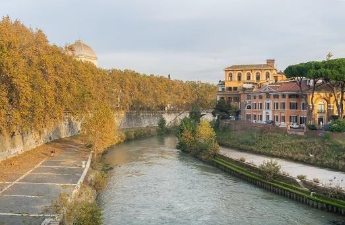
If Rome is the mother of the Western world, then it can be said, as well, that the Tiber is its grandmother. While legend ties the destiny of the City to the twins, Romulus and Remus and their adventure along the river whose banks they would later found their home, the more likely explanation for the early colony of Latins relates to their migration from the Alban Hills where they enjoyed greater access to the Mediterranean via the Tiber River. The blessings of the river, however, are mixed. The City’s location along its banks provided it a strategic location at the heart of the Italian peninsula, a river easy to navigate, and ready access to the sea. On the other hand, the river often causes flooding over wide areas, and with it, even wider areas of damp, marshy areas which create, in their turn, ‘mal aria” (unhealthy air) which, in turn, results in illness often brought about by the mosquitos bred in those same spaces.

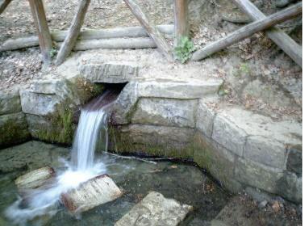
Surprisingly, two springs rising from a beech forest on Mount Fumaiolo, part of the northern Apennine Mountain range in the province of Emilia-Romagna become the modest source of the powerful Tiber River. Flowing 250 miles through the central region of the country, it merges with the Aniene River, passes through Rome and empties into the Mediterranean near Ostia Antica. Largely it derives its fame because of ties to the City through which it runs and on whose banks Romulus established its foundations three thousand years ago.
Its name originates from a legendary story told about the Alba Longan King Tiberus who drowned in a nearby river and whose name may have become associated in the collective memory of the Italic people with the river running through the City. In the ancient accounts of the City’s history, the twins, Romulus and Remus abandoned earlier on its waters and rescued by Lupa, the She-Wolf, founded it along these banks in 753 BC.

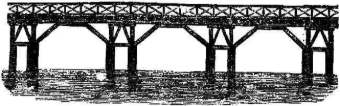
Ironically enough, during the monarchical period, Romans were very reluctant to construct bridges across the river precisely for giving offense to its protector deities. Ancus Marcius, its fourth king, determined to extend the boundaries of the City for defense purposes to the Janiculum Hill on the right bank of the river, defied the taboo, but only after cautiously appeasing the gods by ritual offerings. The resultant structure, Pons Sublicius, made of wood, required frequent replacement.
The Tiber connects the Mediterranean port city of Ostia Antica, 18 miles away, to the City. Seasonally navigable as far north a Orvieto, grain, stone, timber, wheat, oil and wine, necessary commodities for the life and growth of the City, were moved by boats and barges, either rowed or manually towed, up and down the river for its sixty-mile stretch. Wharves and storage buildings lay all along its banks in the Campus Martius area. Silted up as it has become, it no longer serves as a major waterway from the City to the Mediterranean. As noted by one observer (Robert Burns, the poet), however, it continues to be ‘too large to be harmless, but too small to be useful’.

In the 1st century a new port city at Fiumicinio emerged, together with a road leading to it, the Via Portuense, whose city gate remains the present Porta Portese.
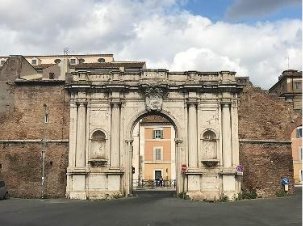
For centuries the Tiber flooded the City with great frequency.
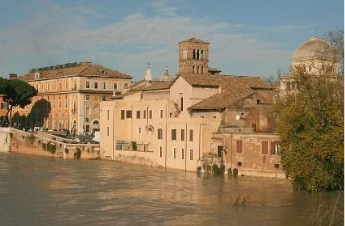
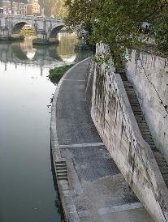
The Campus Martius area, nicknamed “regina aquarium” in Imperial times (“queen of the waters), served as a plain to collect flood water which at times could reach six feet, a long-term issue resolved only the late 19th century when the Italian government lined the river with great stone embankments.
Romans built the best and most durable bridges in the ancient world. Across their Empire the Romans constructed many hundreds of bridges, some of which still stand.
They constructed the remarkable Pons Fabricius, used uninterruptedly since its construction in the 2nd century BC.

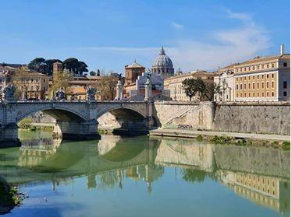
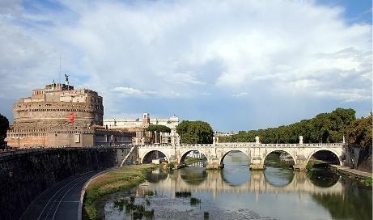
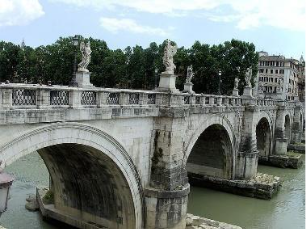
Emperor Hadrian built the attractive bridge, the Ponte Aelio, as the approach to his own Mausoleum in the 2nd century AD. It rests on seven magnificent stone arches, three of which are original.
Mounted on the parapets sit ten Bernini statues of angels each bearing
instruments of Christ’s Passion.
Monte Testaccio stands on the right bank of the river, south of Trastevere, in the City’s ancient port and warehouse district, a huge, but artificial, mound of shards (testae) of broken and discarded pottery jars (amphorae). These once contained oil, wine, and other imports, largely from Spain.
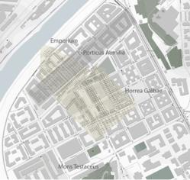
Its huge space houses under its surface over fifty million fragments – five acres rising to a height of one hundred twenty feet and constructed over carefully fitted layers of debris set to stabilize the ever- growing mound. Nineteenth and twentieth century excavations have provided archeologists with new and important information about the economy and commercial activity of the ancient City. Abandoned after the 5th century collapse of the Empire, it turned into a wasteland until the Middle Ages when it became a recreational area and the site of games and tournaments.
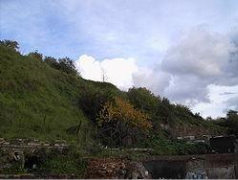
The Milvian Bridge, as important as it is historically, remains one of the City’s least visible bridges, located far from the City’s center. Built over the Tiber by the Consul Gaius Claudius Nero in the 3rd century BC, this became in 312 AD, the site of the famous and historically decisive Battle of the Milvian Bridge. Here the armies of the two claimants to the Imperial throne, Constantine and Maxentius, clashed. Maxentius drowned in the river, Constantine acquired the throne, and the destiny of the Empire forever changed. Ultimately because of Constantine, its religion would be Christian and the City its capital.