Beside the mausoleum of Hadrian once stood the Triumphal Bridge, a main thoroughfare leading to the Via Aurelia. This bridge Hadrian replaced with the newer Pons Aelius which led directly to his monument. Demetrianus, architect of the emperor Hadrian designed the bridge, constructed before Hadrian’s mausoleum in order to transport across the Tiber construction materials from the City. The name of the bridge derives from his own family name (Publius Aelius Hadrianus). In the sixth century once the mausoleum began to be called Castel Sant’Angelo following the miraculous appearance of Archangel Michael on its summit during the reign of Pope Gregory when the pope saw the angel sheath his sword to signal an end to a great plague then ravaging the City. Although a partial collapse of the bridge in 1450 because of excessive crowds of pilgrims crossing it during the jubilee year resulted in minor repairs, very little of the bridge has changed since its 2nd century construction except its name and the 17th century addition of the Bernini sculptures.

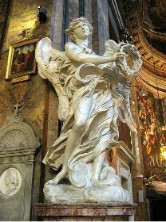
Pope Clement IX commissioned Gian Lorenzo Bernini in 1668 to replace the 16th century statues of Saints Peter and Paul and other apostles installed by Pope Clement VII as decorations for a visit to the City of the l Holy Roman emperor, Charles V. Clement sought to modernize the bridge and create a more gran d and religious approach, a Via Dolorosa, to the Vatican. Its central span hovers above five harmonious Roman arches together with its Bernini-school sculptures rightly justify its reputation as the City’s most attractive bridge. Bernini designed life-sized angels bearing the instruments of Christ’s passion. Executed mostly by his disciples, the sculptures differed in many ways, but each one expressed great emotional fervor and dynamic movement. Bernini sculpted two angels, never intended for display on the bridge itself: an angel with the crown of thorns;
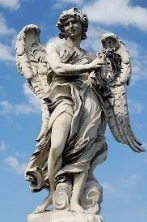
and an angel with the INRI superscription (Iesus Nazarenus Rex Iudeaorum).

The pope retained these and later installed them in the Church of San Andrea delle Frate near Bernini’s home.