
The Galleria Borghese surely stands out as one of the City’s most popular museums. Located in the Casino of Villa Borghese, part of the very expansive 17th century estate developed by Scipio Borghese, cardinal nephew of Pope Paul V. Borghese, like his uncle, became an enthusiastic patron of Bernini, acquired many of his works and placed many of the greatest paintings and sculptures here in the Galleria.

In 1902 the Italian government purchased the estate and opened it to the public as a villa park, one of several in the City.

It features formal flower gardens, abundant trees and shrubs, spacious walkways, and sculpted fountains as well as several museums and enclosures for diverse animals and birds.
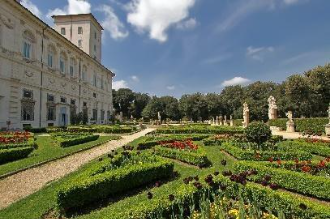
The Casino with its art collection never served as an actual residence but, rather, a place for gatherings and entertainment, daytime or evening. Its architect, the Flemish Jan Van Santen, used for its construction fragments from the Aqua Claudia on the Via Flaminia.
Originally Borghese maintained the art collection in two of his palaces in the center of the City, but in 1615 transported them (two hundred wagon loads) to his casino (Galleria) on the Pincian Hill. In 1782 the Casino was converted into a full museum but, in the early 19th century, Napoleon Bonaparte’s sister, Pauline, married Prince Camillo Borghese who, between 1801 and 1809, sold many of the paintings to Napoleon and exchanged two hundred of the most famous Roman sculptures for an estate in Piedmont. The Louvre still holds many of those paintings to this day.

One work of art did not go to France, however, the marble sculpture by Antonio Canova of Pauline, Camillo’s new wife. Depicted as Venus, the Roman goddess of love (Venus Victrix), the apple she holds in her hand suggests the story of Venus’ golden apple in Virgil’s account (Aeneid) of the origins of the Trojan War. Though commissioned in 1805 by Prince himself, the sculpture of the reclining, nude, princess caused such an uproar that he enclosed it in a space not visible to the public. When asked if she posed naked for the artist, she said, reportedly, that she did, and quite comfortably so, she added, because a stove in the middle of the room kept her quite warm. On full display today, many regard it as one of the Gallery’s best works and view Canova as the greatest sculptor of the Neo-Classical Age and successor in the 18th century to the ancient glory of Phidias and Praxiteles. In this sculpture he succeeded in fusing harmoniously the ideal form of a classical goddess and contemporary portraiture.

In the mid-19th century, Marcantonio Borghese, a descendant of Cardinal Scipio, restored the Casino, redecorated it and added more sculptures to its collection. The present building reflects much of his remodeling. Another Borghese descendant (Francesco) later added to the collection by adding to it works from other Borghese properties in the City. Ancient 3rd century Roman mosaics were laid on the main floor of the Salone. When the Italian government purchased the Villa and its contents, it restored the exterior to something that resembles its 17th century splendor.

The Borghese Gallery, probably the finest non-royal private collection of art in the world, now houses great artistic treasures: in painting, the works of Rafael, Titian, Correggio, and Caravaggio; in sculpture, the works of Gian Lorenzo Bernini and Canova.

Sumptuously decorated, this grand palace is a perfect setting for the extraordinary art collection it holds.

A very good place to begin the tour through the Gallery should commence on the upper floor. This route avoids the initial crowds of visitors passing through the ground floor.
Room IX: Three Raphael paintings: The Entombment, 1507, influenced by the style of Michelangelo/ The Lady with a Unicorn, 1506;/ The Portrait of a Young Man, 1502; Perugino: (Raphael’s Teacher): St. Sebastian; Two Copies of Raphael, Portrait of Pope Julius II; La Fornarina (Raphael’s girlfriend).


Room X: Correggio (his only Roman work): Danae; Parmigiano, Portrait of a Man; Lucas Cranach the Elder, Venus and Cupid.

Room XI: Garofolo: Adoration of the Shepherds; Ortolano, The Deposition.

Room XII: Leonardo da Vinci Copy: Leda and the Swan; two Sodoma paintings: The
Holy Family, The Pieta.

Room XIII: Francis Francia paintings: St. Francis, and St. Stephen.

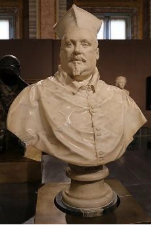
Room XIV: Gian Lorenzo Bernini: – stone carving of Amalthea the Goat and Zeus (his earliest work)/ two busts of Cardinal Scipio Borghese/ two Self Portraits/ Portrait of a Boy; Guido Reni: Moses with the Tablets of the Law; Guercino: The Prodigal Son.



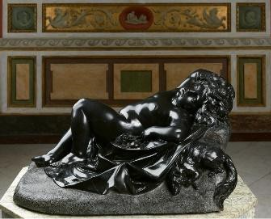
Room XV: Jacopo Bassano: Last Supper/ Sheep and Lamb; Alessando Algardi: marble putto of the Allegory of Sleep.
Room XVI: Giorgio Vasari: The Nativity.

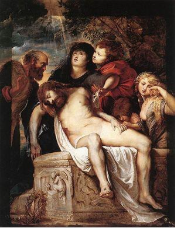
Rooms XVII and XVIII: two Rubens paintings: The Deposition/ Susanna and the Elders.
Room XIX: works by Domenichino: the Cumaean Sibyl; and Caracci and Lanfranco.

Room XX: four works by Titian: Sacred and Profane Love/ Venus Blindfolding Cupid/ St. Dominic/ Scourging of Christ.


Ground Floor
Salone: Pietro Bernini: high relief of Curtius (Roman work redone by Bernini’s
father); ancient Roman sculptures.

Room I: Canova: Pauline Bonaparte as Venus Victrix sculpture (Napoleon’s sister);
Luigi Valadier: Herm of Bacchus.

Room II: Bernini sculpture: David (sculpted for Casino).

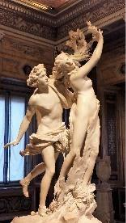
Room III: Bernini sculpture: Apollo and Daphne (sculpted for the Casino).
Room IV: Bernini sculpture: Rape of Persephone (sculpted for the Casino).

Room V: replica of the Sleeping Hermaphrodite.

Room VI: Bernini sculpture: Aeneas and Anchises (completed at age 15 with help from his father, Pietro, and sculpted for the casino)/ Truth Revealed sculpture.

Room VII: Tommas Conca: Apollo and the Muses.

Room VIII: six Caravaggio paintings:
Boy with a Basket of Fruit. An early painting, Cardinal Borghese seized it from the shop of the Giuseppe Cesari (Cavalieri d’Arpino), where Caravaggio worked shortly after he arrived in the City. The artist had painted it as a demonstration to Cesari that he could do portrait painting instead of the still-life works to which he was being regularly assigned. It represents the first instance of Caravaggio’s use of a diagonal shaft of light to illuminate his subject, a technique he would employ often in many of his later paintings.

Sick Bacchus. The greenish tint in the coloring of the subject, a self-portrait, reflects the condition of the painter who was recovering from a serious injury at the time of its composition. Bacchus represented the god of wine, fruit, vegetation, merriment, and sensuality. In this image the melancholic smile of the god, a Renaissance symbol of creative genius, signals the painter’s precocious confidence in his future artistic greatness.

Madonna of the Palafrenieri. At the urging of his art-loving nephew, Cardinal Borghese, Pope Paul V commissioned this painting for St. Peter’s. He intended to place it in a chapel owned by the Confraternity of the Palafrenieri (papal grooms). The anti-Protestant theme appears as Mary crushes the head of the serpent. Reference to the doctrine of Immaculate Conception, is also implied by the contrast of light and darkness visible in the figures of Mary and her mother St. Anne. Within two days of its placement in the chapel, the Confraternity rejected the painting because of its radical naturalism exemplified in the low-cut dress of Mary.

David and the Head of Goliath. One of the paintings Caravaggio carried with him on his return to Rome and intended as a gift for Cardinal Borghese with the hope that the Cardinal would intervene with his uncle, Pope Paul V, to grant him pardon from the death sentence he had incurred for the murder of a Roman rival, Ranuccio Tomassoni. Implied in the image is a plea to be saved. Caravaggio’s image appears clearly in the face of Goliath. Some believe that the youthful David figure represents also a self-portrait, a symbol of the contrast between grace and sin, redemption and condemnation, life and death.

St. John the Baptist. Caravaggio’s un-commissioned work, found among his effects at the time of his unexpected death, constitutes his last painting. Some speculate that the subject represents not the Baptist but, rather, the mythical figure of the shepherd boy Phryxus, son of Athamas, king of Boeotia and the goddess Nephele.

St. Jerome. This work commissioned by Cardinal Borghese depicts St. Jerome the scholar and author of the Vulgate Bible. Some art historians in the past have attributed this work to the painter de Ribera, a 17th century Spanish “Caravaggista”, but the historical evidence supports the view that it a genuine work of Caravaggio.
