Philip Neri, originally a Florentine, enjoyed justifiably the reputation as one of the City’s most zealous and beloved priests in its history. He is regarded as its “second apostle”, after St. Paul, because of his widespread contacts with and influence over people from all strata of society, rich and poor, high and low, saints and sinners alike.
To his contemporaries he was known as ‘Pippo Bouno’ (good little Phil), a family nickname given by his family because of his kindness and gentleness as a boy. Neri began his ministry at San Girolamo della Carita, a hospice for the sick and weary, and at San Giovanni dei Fiorentini, church of the Florentine community in the City. The work of the secular religious community he founded focused mainly on serving the needs of the City’s many pilgrims and assisting in the recovery of patients newly released from hospitals. A child of the Counter- Reformation, but foe of clericalism, he worked tirelessly to bring about changes in the Church by modelling the virtues of friendship, kindness, and generosity.

Pope Gregory XXIII gave him the property for a new church in 1575 built with donations from wealthy friends and benefactors, including St. Charles Borromeo. Several architects contributed to the design and construction, but most especially, its last, Giacomo della Porta. Similar in design to the Gesu, it represents church architecture at its best in the age of the Counter- Reformation. Santa Maria in Vallicella serves as the principal church of the Oratory, which, most often, Romans refer to simply as Chiesa Nuova. Although completed in the late 16th century, it replaced a much older 6th
century church built in the age of Pope Great the Great.

Giacomo della Porta, creator of the Fontana delle Tartarughe (four turtles) in Piazza Mattei, designed this well-known fountain, la Terrina (serving bowl) resting now in front of the church. It once sat in Campo dei Fiori, used for washing vegetables and fruit sold in the daily market, but moved here in the 17th century when the government replaced it with the monument to Giordano Bruno.

The 17th century façade, gifted by the bishop of Todi as indicated in the inscription above the main door, was designed by Fausto Rughesi, and resembles that of the Gesu. Neri’s presence, still felt in the church fabric, expresses itself in its metal door handles, for example, decorated with the image of a flaming heart, part of Neri’s congregational insignia. Unlike most of the traditional Roman churches with their requisite nave and side aisles, Chiesa Nuova lacks side aisles because of the Counter- Reformation stress on the importance of effective preaching enhanced by wide open spaces.

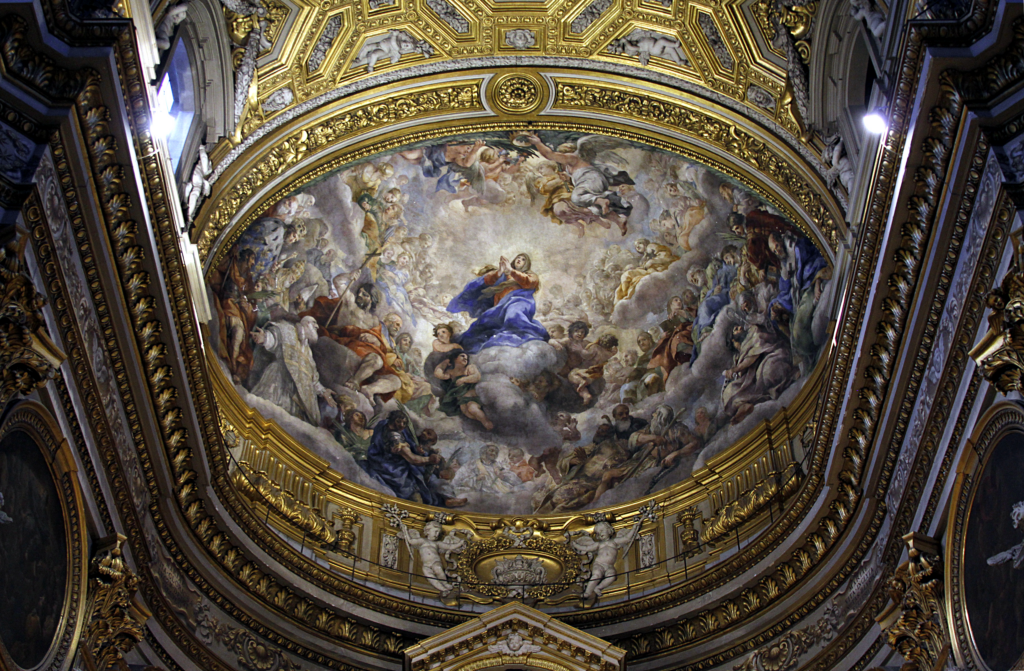
Despite the efforts of Neri during his lifetime to minimize internal decoration, the community filled the church with frescoes and paintings after his death in 1595. Masterpieces by some of the best-known painters of the age include: Pietro da Cortona’s Assumption fresco in the apse; Cavalieri d’Arpino’s Coronation of Mary in the Transept; Alessandro Algardi’s sculpture of St. Philip and Angel in the sacristy.
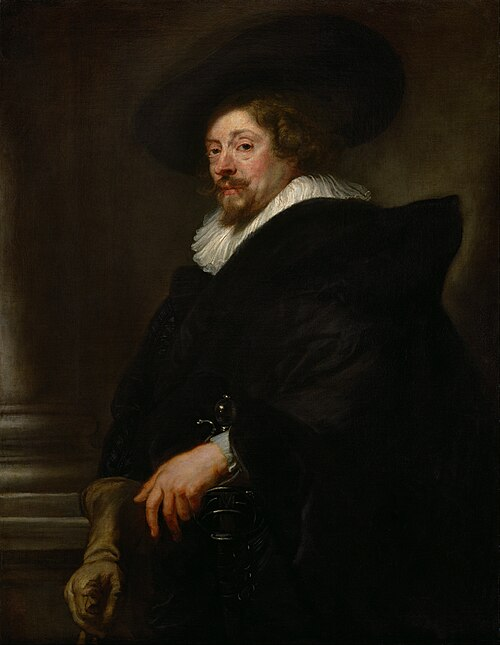
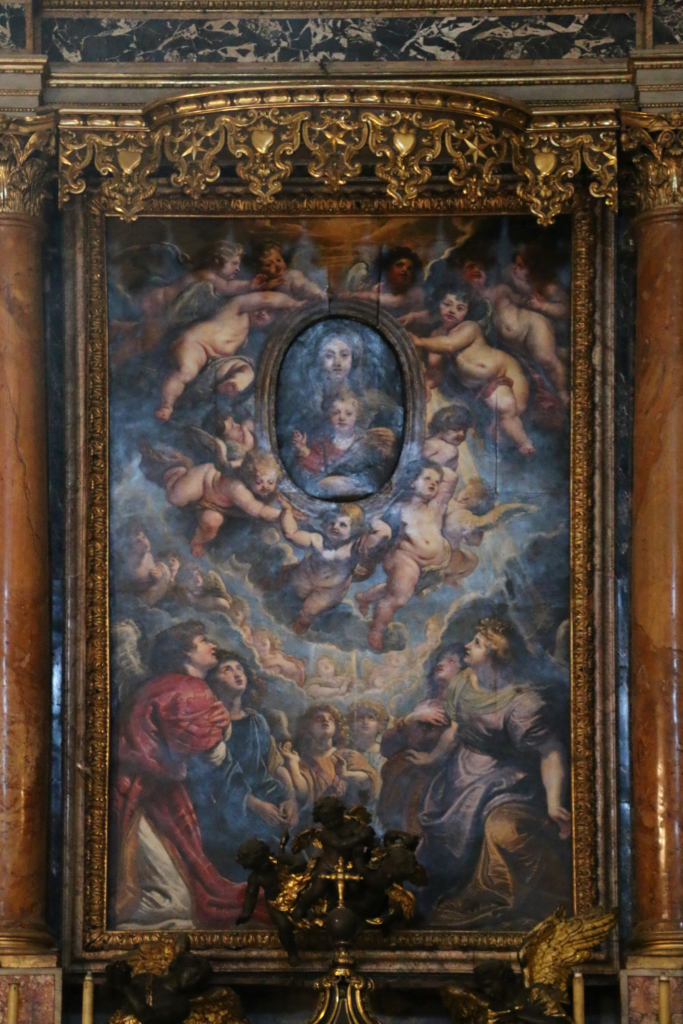
Three paintings by the Flemish master artist, Peter Paul Rubens, his only extant works in the City, hang in the sanctuary of the church: Mary and Child with Angels over the main altar; Saints Nereus, Achilles and Domitilla on the right side, and Saint Gregory the Great with Saints Maurus and Papius on the left. Rubens originally painted the Mary and Child picture on canvas but, dissatisfied with the quality of the light reflecting from it, repainted it on a slate surface.


Rubens, a Flemish Baroque artist, gained great popularity among European royal houses and aristocracy because of the dramatic, colorful, dynamic, and sensual qualities of his works which focused mainly on themes both mythical and Christian. A prolific painter on diverse media (canvas, wood, slate), he created a significant number of masterpieces in widely diverse media: portraits, landscapes, altarpieces, and tapestry cartoons. So highly regarded were his artistic, scholarly, and diplomatic skills that two European kings bestowed knighthood upon him, Kings Philip II (Spain) and Charles I (England).
The Mary and Child part of the altarpiece recreates on a copper plate the image of an older, much venerated, miraculous icon which now lies under the Rubens painting. The icon, originally a 15th century fresco painted on the wall of a local side street, depicted the Virgin and Child. When struck by an angry passerby, blood appeared on the face of the Virgin. Removed from the wall and set into the church, it became an object of devotion to the faithful of the neighborhood and a symbol of the Oratorian community. On feast days and special occasions Rubens’ Madonna plate can be lowered mechanically to expose the original icon.
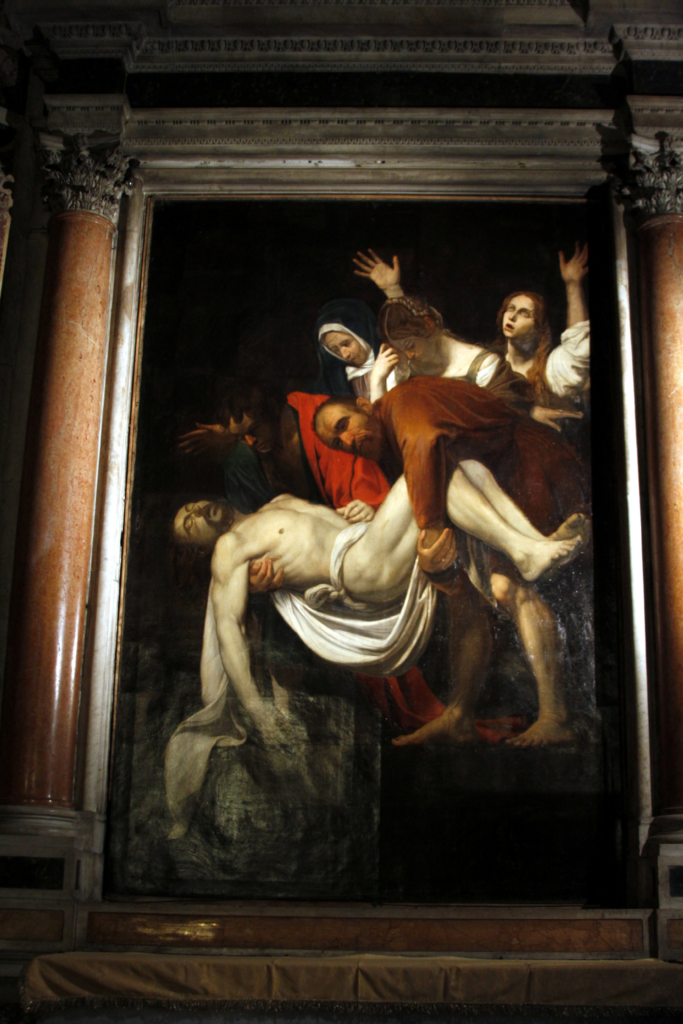
Chiesa Nuova holds a beautiful colorful print of Caravaggio’s painting of the Entombment of Christ commissioned as an altarpiece for the church. Placed in the church for a few days its canons ultimately rejected it because of the highly naturalistic features of its subjects. It finds its home now in the Pinacoteca of the Vatican Museums.
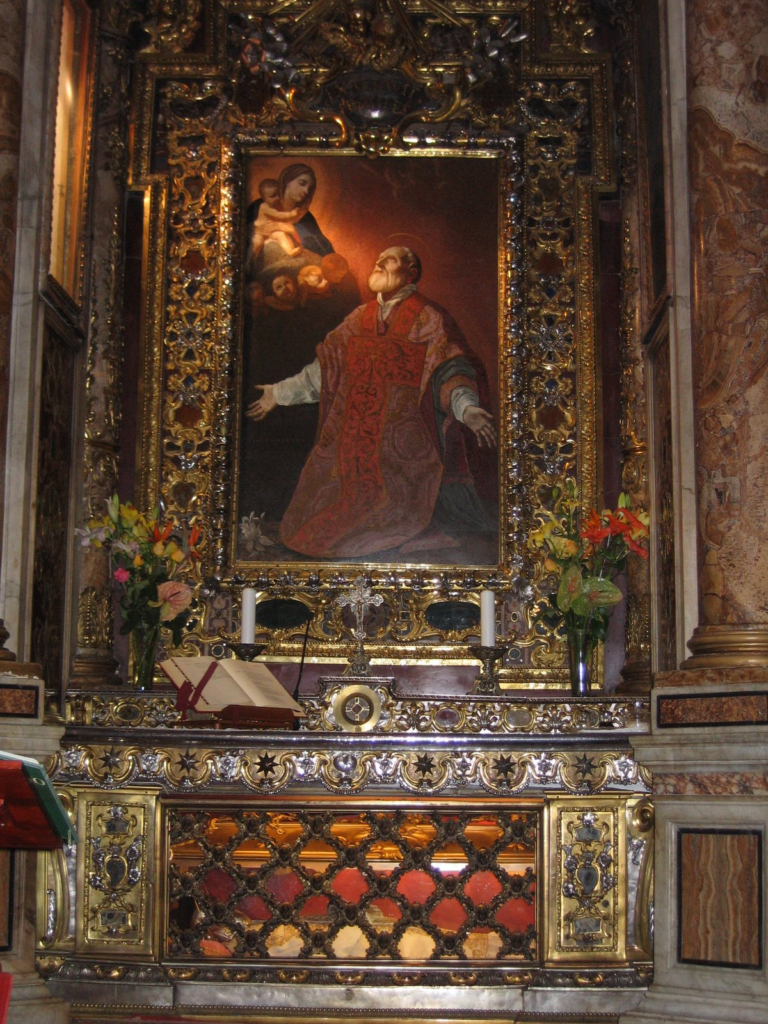
To the left of the apse sits the exquisitely decorated, Baroque Chapel of St. Philip Neri, created nine years after his death and featuring precious materials of all kinds including gold and lapis-lazuli. Pomerancio frescoed the vault and wall scenes depicting episodes from the life of the saint. Neri’s body remains in an urn under the altar. The altarpiece, a mosaic copy of Guido Reni’s painting, depicts the Saint with the Blessed Mother.
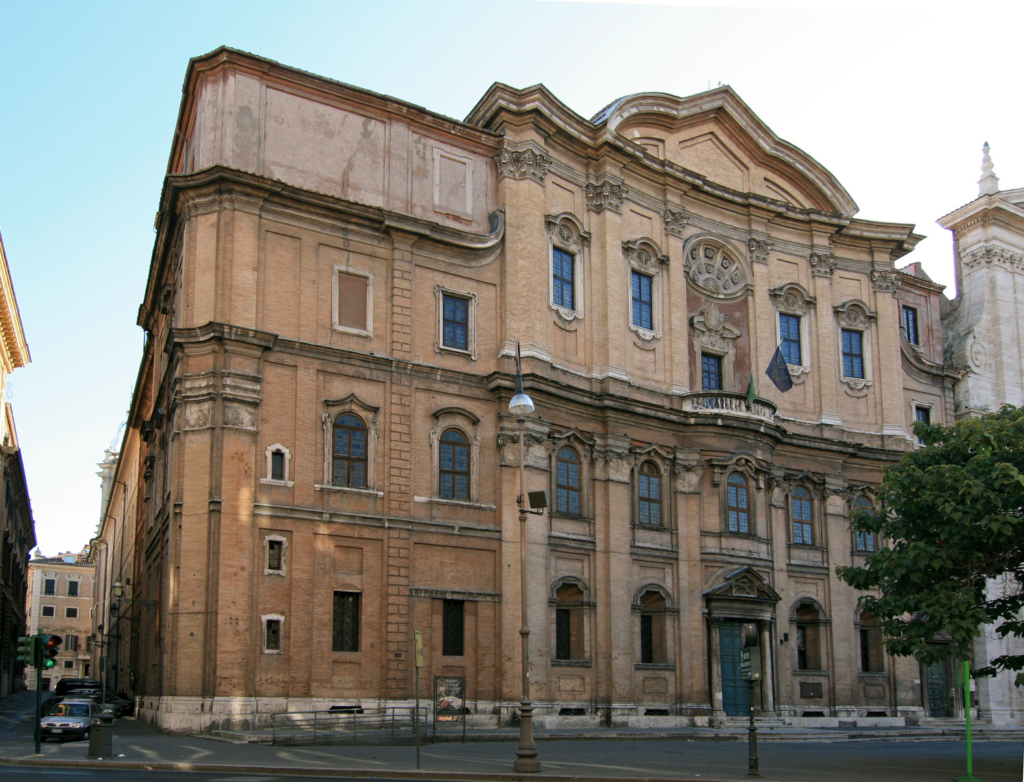
Adjacent to the church stands the Oratorian House (residence) whose space occupies a city block. Francesco Borromini designed parts of it, the Oratory, including the façade, courtyards, refectory, library, and clock tower.
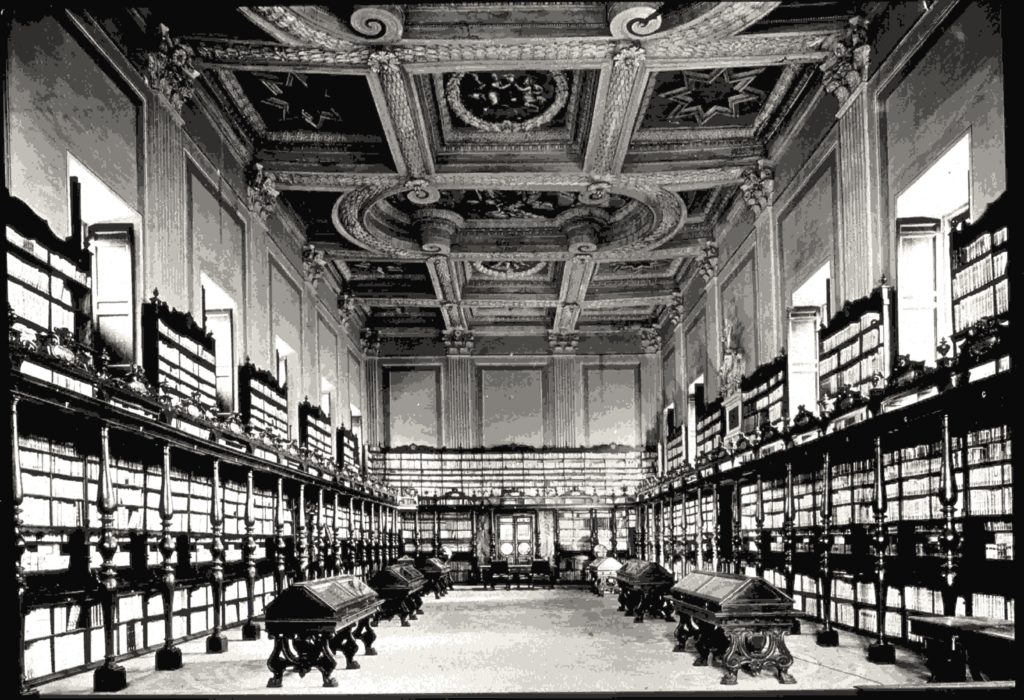
Here in this building, the Saint organized performances of sacred music, origin of the musical term, oratorio, and established in 1581 the first public library in the City, the Vallicelliana, which now houses the Institute for Roman Studies.
Its clocktower makes it clearly identifiable as a Borromini work because of its unusual concave features.