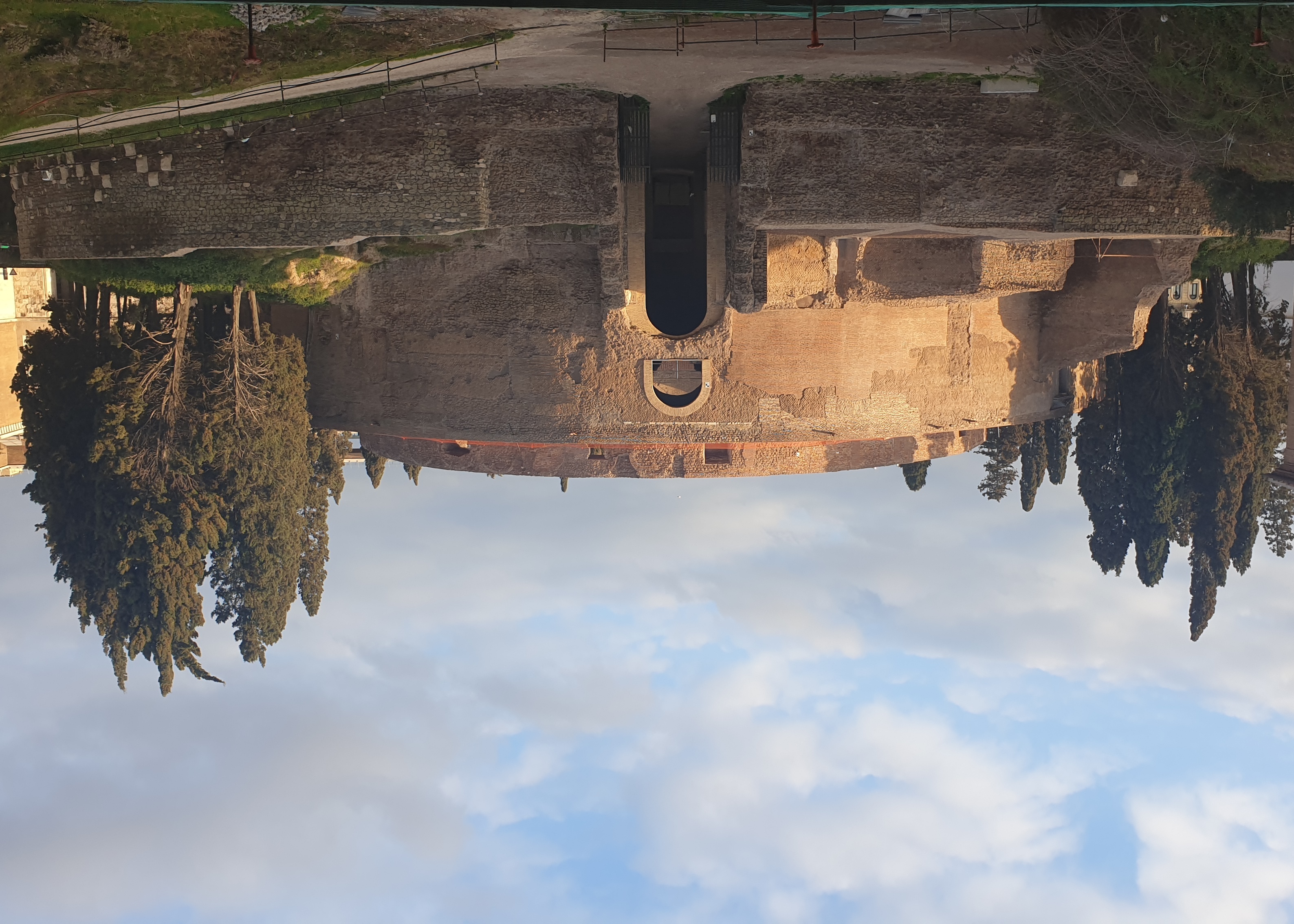
For decades, the long-neglected Mausoleum evoked surprise and wonderment among many visitors to the City. Long abandoned, overgrown with weeds, a refuge for feral cats, and littered with broken glass and debris, the important historic site cried out for rehabilitation and restoration to its rightful place as a major historical destination. Augustus died in 14 AD and the City began efforts, to open it to the public for the 2000th anniversary of his death.

The “Augusteum” which sits directly across from the Ara Pacis of Augustuswas a huge tomb constructed for the emperor shortly after his military victory over Marc Antony and Cleopatra in 31 BC. Its designers, although inspired by one of the original “seven wonders” of the ancient world, the Mausoleum of Halicarnassus built in 352 BC for the Anatolian king of Caria, modelled it on the Hellenistic tomb of Alexander the Great. Which Augustus had visited in 30 BC.

A century later, upstream and on the other bank of the Tiber, yet another mausoleum, Hadrian’s, would rise, modelled on, but a grander version of the one downstream.
Augustus commissioned his in 28 BC, just one year after his return to the City from his Egyptian campaign against Marc Antony and Cleopatra. Not yet declared “Princeps’ (‘1st citizen’) by the Senate, he chose its site, the Campo Marzio, for propagandistic, political, and dynastic purposes. The magnitude, visibility, and very durability of the structure bespoke his military power, political aspirations for himself and family, and intimate connection to the divinely willed destiny of the State. It had also become fashionable among wealthy Romans to build extravagant and monumental tombs for themselves outside the City walls. The grandiose tomb of Cecilia Metella, wife of Crassus, rose up along the Via Appia in the 1st century BC and, contemporary with the tomb of Augustus, Caius Cestius built a large pyramid-shaped tomb for himself outside the Porta San Paolo near the Protestant Cemetery. Clearly, given its size and location, the Augusteum, was constructed not only for Augustus’ family, but for his successors as well, was a sure sign to all that imperial rule would be a permanent feature of the Roman state.

Augustus died in August,14 AD, at his summer estate in Nola, near Naples, uttering, tradition says, the interesting question: did I not act the play well? Few, of course, could have equaled it, let alone done better.

Once back in the City, the Senate laid out his body on a gold couch and carried it to the Forum for the funeral ceremony where his adopted son and successor, Tiberius, delivered the eulogy. Afterwards, they moved his body to Campo Marzio for cremation and placed the ashes in the Mausoleum he had prepared for himself and family members years earlier. Unlike Julius Caesar who was made a god (apotheosized) by a vote of the Senate, Augustus had rejected their initiative during his reign and insisted that he would accept apotheosis only through the will of the Roman people. Instead, he allowed for the cult of ‘Divus Augustus’ which loosely connected himself to the spirits of other established gods. Shortly after his death, however, in September, the Senate declared his deification, apotheosis, in recognition of his divine status.
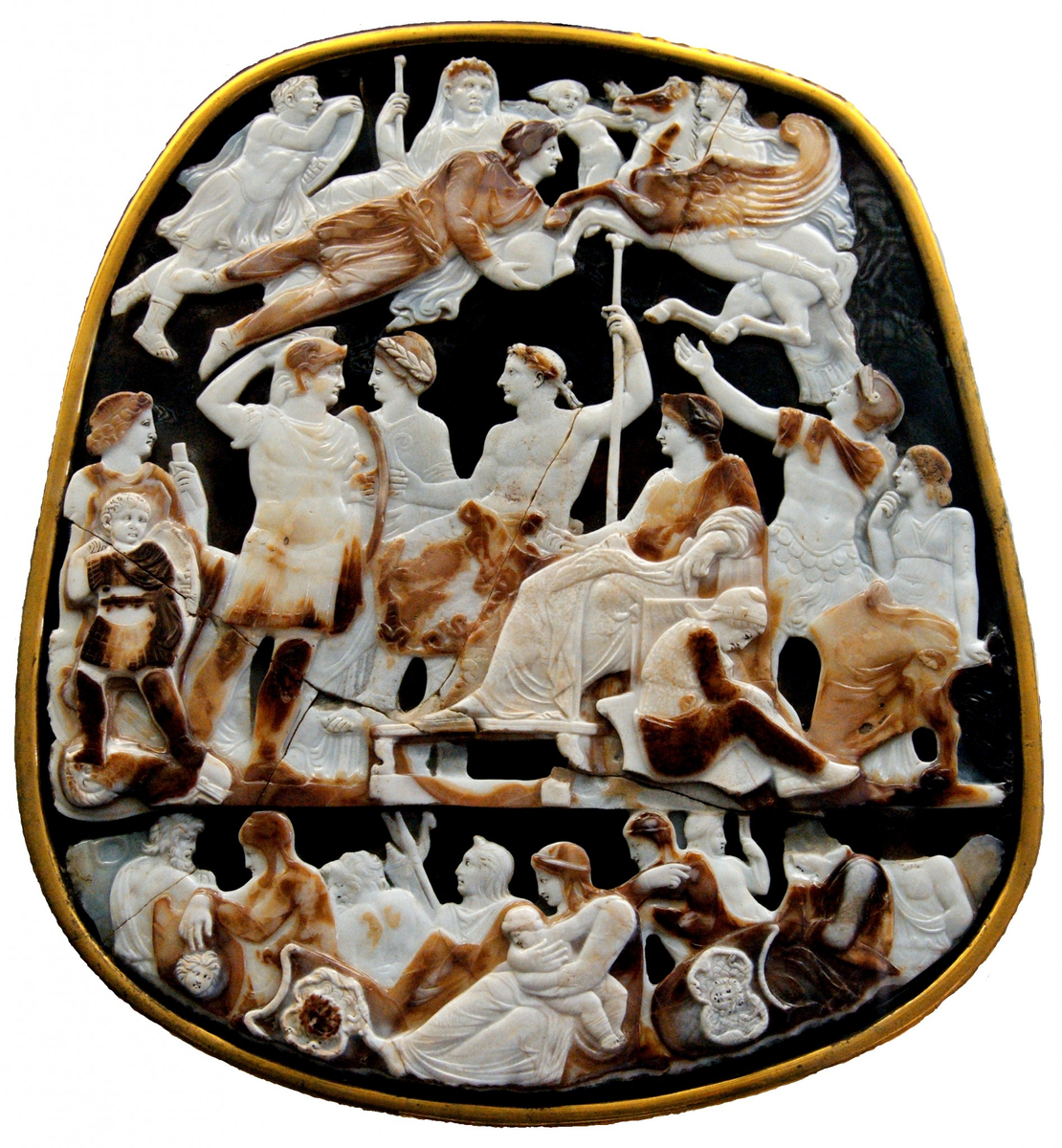
His mausoleum had a circular core and rested on a conical mound of earth composed of several concentric rings of earth and brick. Covered with white travertine on its exterior and with cypress trees on its upper level, at its center on the top towered a huge bronze equestrian statue of Augustus.

The original mausoleum measured 300 feet in diameter and 140 feet high. It remains the largest circular tomb in the world.

Marcellus, the presumptive heir of Augustus died, aged 19, unexpectedly, perhaps of malaria in 23 BC. His body occupied the first burial chamber of the Mausoleum. Augustus later joined him there in 14 AD, his wife Livia in 29 AD and all his Julio-Claudian imperial successors (descendants either from his or her family line) except Nero who had been buried at the foot of the Pincian Hill: Tiberius (37 AD), Caligula (41 AD) and Claudius (54 AD). In all, at least twenty members of the imperial family were buried within it: five before Augustus and twenty after him. Emperor Nerva, a non Julio-Claudian, died in 98 AD, the last of imperial internments in the Mausoleum.

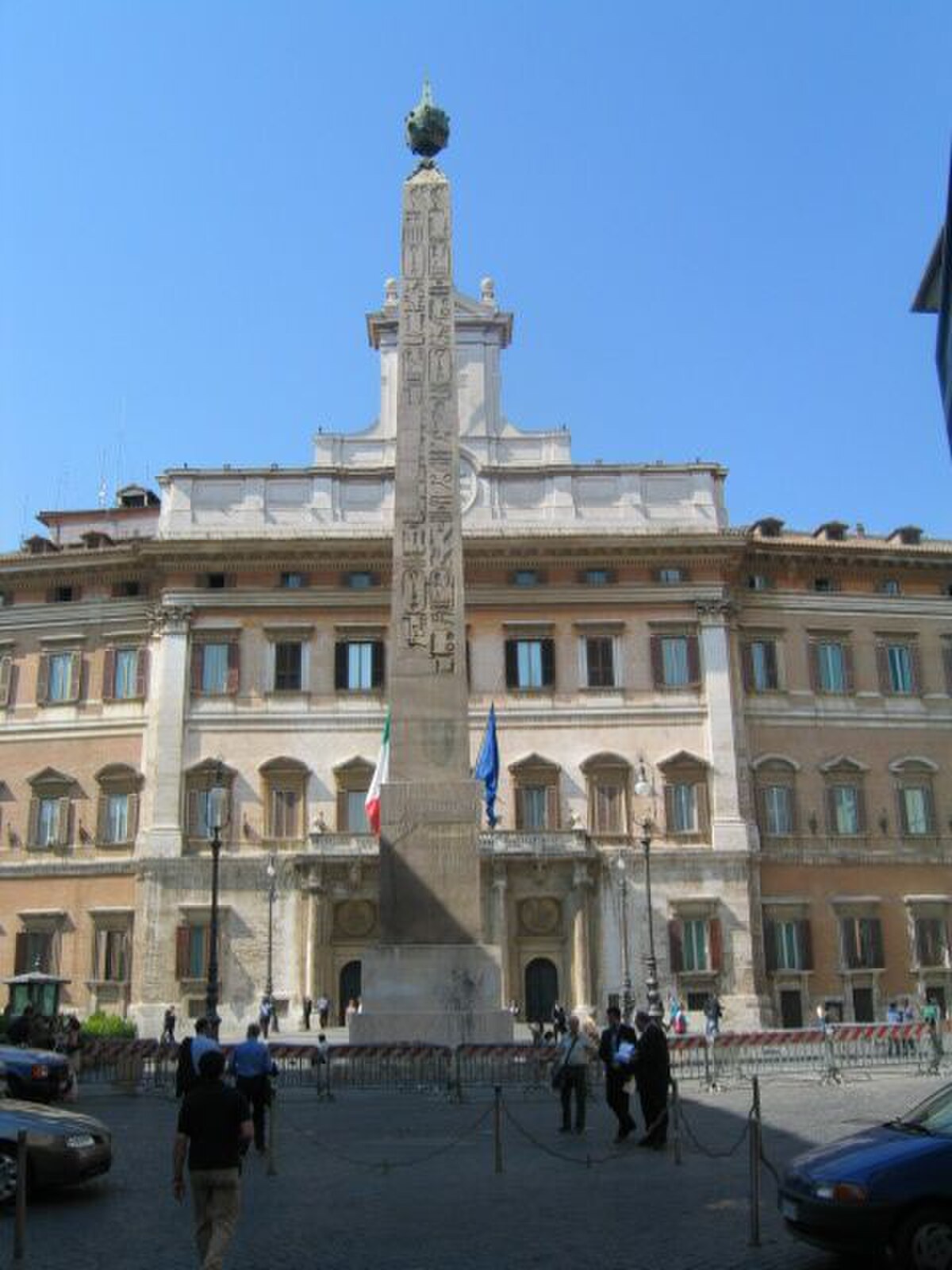
A pair of red granite obelisks created in Rome for the mausoleum stood in front of the entrance. Popes later removed and transported these to other parts of the city: one in front of the Presidential Palace on the Quirinal Hill and the other on the side of St. Mary Major Basilica on the Esquiline.

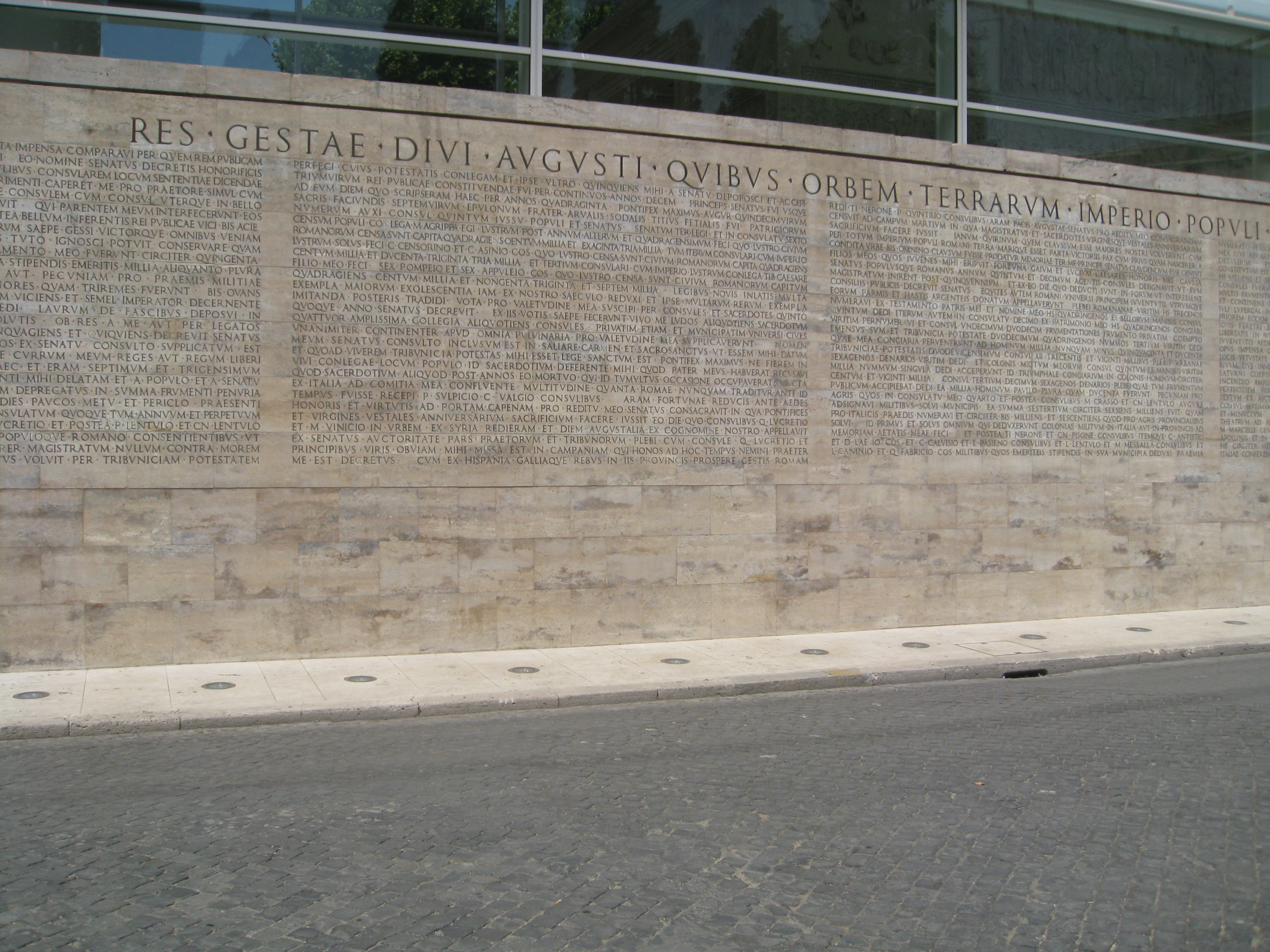
Inscribed on a marble wall alongside the Ara and across the street from the Mausoleum appears the text of the Res Gestae, an account written by Augustus before his death summarizing his accomplishments and legacy to the Roman people. It represents not an autobiography but, rather, a propagandist account, written in an highly unique literary form, highlighting those achievements and benefactions for which he wished especially to be remembered in his efforts to ‘make Rome great again’: the offices he held; the personal expenditures and donations he made for public works and spectacles; the government policies he initiated on behalf of the Roman public; and the successful military campaigns he waged against enemies of the state. The oft-quoted phrase of Augustus that ‘he found Rome a city of marble but left it one of marble’ is not stated directly in the Res Gestae, but reported by the historian Suetonius in his biographical work, The 12 Caesars (De Vita Caesarum). Augustus may have intended it as well as a blueprint for his imperial successors. The original version of the text was inscribed on two bronze pillars, a part of his tomb, but later melted down during the Middle Ages. A complete version of the text written both in Latin and Greek was discovered in a temple in Ankara in the early 20th century and was later copied for Mussolini who attached in 1938 its Latin version to the newly reconstructed Ara Pacis of Augustus.
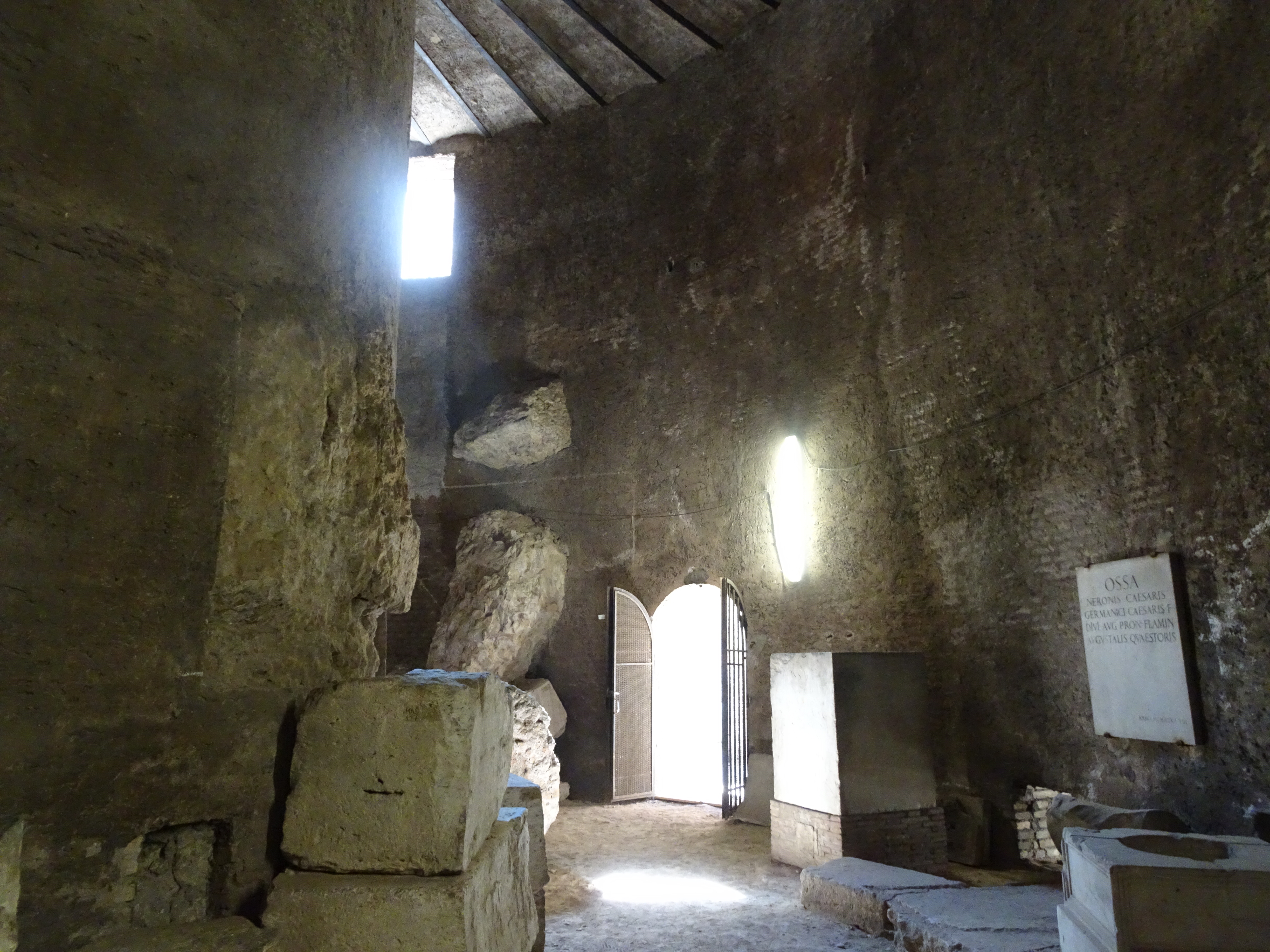
When Augustus died in 14 AD his body was incinerated on a funeral pyre whose fire lasted for five days. A chamber in the center of the mausoleum housed three niches in which rested gold urns containing ashes of Augustus, his wife Livia, and his predeceased nephews.
Throughout the centuries the structure has served widely diverse purposes. The powerful Colonna family converted it into a fortification in the 12th century, practice very common during the Middle Ages when aristocratic families (Orsini, Pierleoni, Conti, Caetani, Savelli, Frangipani) commandeered for this purpose large monuments throughout the City. In 1347 a Roman crowd burned the body of Cola di Rienzo, a short-term City dictator, at the site of the Mausoleum. A 19th century monument to Cola stands at the foot of the Capitoline Hill, where died at the hands of a Roman mob.

Renaissance families used the immediate area around the Mausoleum for garden space and in the 19th century, a circus. In the early 20th century, the interior became a concert hall. Intending to transform into a tomb for himself, Mussolini in the 1930’s declared it an historical site and a symbol of the reemergence in Italy of a newly established Augustan age. City officials opened the mausoleum to the public in 2021 for the first time in many years after a five-year restoration project initiated in 2017.

In 10 BC the Roman Senate also commissioned an horologium (sundial), an obelisk set near and on the same axis as Mausoleum and in such a manner that its shadow fell on its door on the day of Augustus’ birth. The obelisk was one of the two which Augustus had transported from Heliopolis in Egypt to the City after he annexed it in 30 BC following the 31 BC Battle of Actium defeat of Marc Antony and Cleopatra. The horologium served to confirm the accuracy of Julius Caesar’s new calendar of 365.25 days. In the Middle Ages the shaft of the obelisk fell, broke into five pieces and was gradually buried under the surface of the ground until recovered in the 18th century and erected it in Piazza Montecitorio. It now stands in front of the 17th century palace Bernini which had designed for the Ludovisi cardinal-nephew (Ludovico) of Pope Gregory XV. This Palazzo, Montecitorio, currently serves as home for the Iower house of the Italian parliament, the Chamber of Deputies.