
Perched atop the Esquiline Hill, one the City’s seven hills rising above the Colosseum and Roman Forum, stands the magnificent Marian Basilica, Saint Mary Major.

The Esquiline became one of the most highly populated residential areas of the ancient City. Over the course of its history some of its most prominent figures maintained houses there including one of its kings, Servius Tullius.
Remains of its ancient public and private structures are still visible today: Nero’s Domus Aurea, Trajan’s Baths and gardens called the Horti Liciniani.

The hill takes it name from the many oaks trees (aesculi) which covered it in ancient times. In Republican and Imperial ages it was the most densely populated areas in the City, a place totally devoid of any trace of urban planning. The two great sections which make it up represent a study in the strongest of contrasts. The Carinae area, the highest point on the hill, hosted the villas and gardens of the City’s wealthiest citizens, including kings (Servius Tullius and Tarquinius Superbus), emperors (Tiberius and Nero), powerful politicians (Maecenas, the friend and advisor of Augustus), authors and poets (Ovid, Virgil and Horace). Between Carinae and the lower valley stood the Suburra, a vast neighborhood of over thousand apartment comlplexes, four to six stories high, which housed the majority of middle and lower class (plebeian) residents of the City. These windowless apartments (insulae) lacked virtually all basic amenities: running water, sinks, lavatories, fresh air, chimneys, central heat. In winter they were heated with portable braziers filled with burning charcoal, dangerous because of carbon monoxide poisoning or potential fire. A maze of narrow, winding, congested, loud, dark, filthy, smelly, garbage-strewn, and crime-ridden streets filled this area of slum dwellings. Julius Caesar grew up in this part of town and remained there until he moved to the Regia in the Forum when he became Pontifex Maximex, an explanation, in part, of the great popularity he enjoyed among members of the plebeian class.

Roman Christianity’s origins were humble enough, a small Jewish sect born in the 1st century AD within the confines of Jerusalem, a part of the Roman Province of Judaea. Its rapid spread, however, especially after the 4th century, resulted in part from the assistance of Imperial legal, administrative and financial backing. The emperor Constantine I paid for and supported the City’s first great churches and encouraged its ecclesiastical activities.
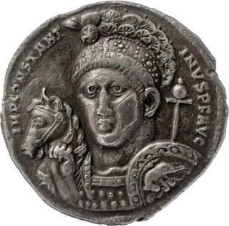
In the Middle Ages, however, the Papal States gradually assumed in Western Europe the public functions of the ancient Imperial state system. The construction of the basilica of Santa Maria Maggiore, one of the City’s first great pilgrimage churches, signaled clearly the transition of public authority from the State to the Church. Church construction hereafter pertained to the papacy.
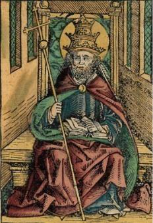
Very little of the the pre-Renaissance structure remain intact today because of many restorations made to it in the course of its long history. Of the City’s many beautiful basilicas, however, St. Mary Major represents historically the best combination of the most important architectural styles: Paleo-Christian parts of nave and arch mosaics; medieval Cosmatesque and Romanesque campanile; Renaissance coffered ceiling; Baroque twin domes and facades. Santa Maria Maggiore constitutes one of the four major papal basilicas, one of the seven pilgrim churches, and the first and largest Marian church in the City. Christians named it Sancta Maria ad Nives because a legend recounts that in the year 352, during the papacy of Liberius, a Roman couple vowed to donate their possessions to the Virgin Mary. They prayed for her guidance to know how they could dispose of their property in her honor. In August they had a vision of a mid-summer snowfall and were told to build a church for her at the place where it fell. It snowed on top of the Esquiline Hill on August 5, and there they built their church for her. Many refer to it as the Liberian Basilica because of its connection to Pope Liberius.
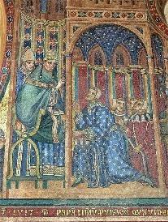
The basilica also has ties to the more nefarious story of his papal successor, Pope Damasus. When Liberius died in 366 AD a tumultuous papal election ensued. The faction supporting Damasus won out in the end but not until they had slaughtered one hundred or so followers of his rival Ursinus whose followers had barricaded themselves inside this Liberian basilica where they were killed. Despite the rocky start to his sixteen-year papacy his notable accomplishments include patronage of St.
Jerome’ production of the Vulgate Bible and his presidency over the 382 AD Council of Rome which, among other things, determined formally the official number (twenty-seven) of the sacred texts of the New Testament canon. Pope Sixtus III built the Basilica around 435 AD to replace the nearby pagan cult center of Juno Lucina with a Marian church. Constructed over two ancient buildings, a temple and a public library, the church arose in the age of the Council of Ephesus (431) which had just recently proclaimed Mary as the mother of Jesus (Theotokos), the Son of God. St.
Mary Major took its name from that event and thus became the first major church in the City named in her honor.

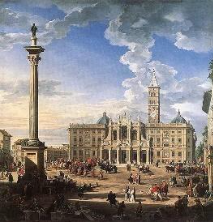
A later 18th century loggia with its open portico in the first story and the Loggia of Blessings above it camouflage the 12th-century entrance façade. Two wings on either side of the façade (sacristy and papal apartments on the right and a ceremonial stairway on the left) give the structure the appearance of a palace from the piazza in front.

The Column of Peace in front of the basilica once belonged to the Basilica of Maxentius in the Forum and was transferred here by Pope Paul V in the 17th century. Carlo Maderno, the architect, placed it on a plinth bearing the Borghese coat of arms and the name of the pope written larger even than those of the Virgin and Child Jesus. The inscription states erroneously that the column comes from Temple of Peace rather than from the Maxentius Basilica. Perched atop the column rests the bronze statue of the Immaculate Conception. Maderno also designed the fountain below and, like the column, it bears the coat of arms of the Borghese pope, Paul V. Pope Gregory XI after his return from the Avignon exile in 1377 constructed the Romanesque 14th century campanile, the highest one in the City (245 feet). Made of red brick it rises six stories with arched openings on all sides. Its original 13th century bell, called the Sperduta, remains now in the Vatican Museum.
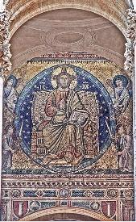
The 13th century loggia mosaic decorates the façade of the basilica above its old portico. The loggia itself displays a round 5th century window (oculus) and scenes represent the story of the founding of the basilica. The center of the upper section depicts the Byzantine-styled Christ
as Pantokrator (Ruler of All). Also included are Our Lady, apostles, and saints. Latin inscriptions identify the saints, Mary with a Greek lettering.
Above these appear symbols of the Evangelists (angel, lion, ox, eagle). In the Middle Ages, the piazza in front of the facade served as open worship space for large processions and groups of Marian pilgrims for whom Mass would be celebrated in the portico. This explains why images of this kind (deeisis), usually reserved for sanctuaries, appear on this particular façade.
The portico retains the eight ancient columns of its razed mediaeval predecessor: four in grey granite and four in red. Its lower part has five entrance doors with the middle three opening onto the central nave of the basilica. A modern 20th century central bronze door contains panels depicting stories from the life of Our Lady along with images of Old and New Testament figures.

The door on the far-left leads into the left aisle and serves as the Holy Door open during Jubilee Years. Of the four major basilicas, this Holy Door alone sits at the left side of the entrance. The Holy Door opens in December of a Holy Year and closes only in the following December. St.
Pope John Paul II in 2001 installed this contemporary Holy Door designed by Luigi Enzo Mattei. Two (of six) main panels depict the risen Christ whose facial features resemble those on the Shroud of Turin and his mother Mary who is described (in Latin) as the mother of God and of the Church. The hands of both, worn-down by touches of pilgrims to the site, glisten in the light. At the top of the door rests the coat-of-arms and motto of John Paul II.

At the right end of the portico stands a bronze statue of King Philip IV of Spain designed by Bernini.

Santa Maria Maggiore’s architectural interior follows a classical plan.

Modelled on a traditionally Roman, second-century imperial basilica, it features a tall and wide nave, an aisle on each side, with a semicircular apse and nave.

The original nave of the church of Sixtus III survives structurally intact together with its mosaic decoration. Of all the patriarchal Basilicas in the City, only St. Mary Major retains the original form of the classical Christian Basilica. Its proportions and interior spacing follow the classical prescriptions of the architect, Vitruvius. Unlike many Roman churches, medieval on the outside and Baroque inside, this church reverses the general pattern: Baroque outside but early Christian inside.

Forty-two Ionic marble (thirty-eight) and granite (four) columns support an entablature with a scroll work design rather than arcades. The columns come from ancient buildings and do not match one another, though they seem uniform despite differences in thickness.
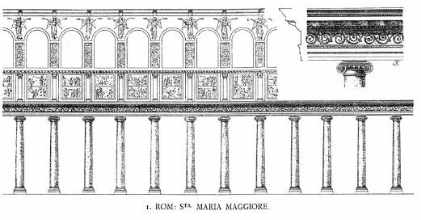
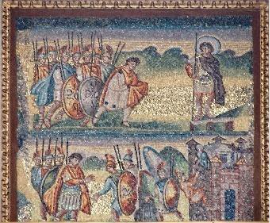
5th century mosaics fill the nave and triumphal arch, among the oldest representations of the Virgin Mary in Christian antiquity. They symbolize the historical relationship of the Hebrew and Christian faiths in which the Hebrew Bible foreshadows the New Testament, visible in the images of both Testaments. Nave mosaics move in order and cyclically from the left side near the high altar towards the entrance and from the right of the high altar towards the entrance again. Six of the original panels disappeared when the Pauline and Sistine Chapels were built. The left cycle depicts scenes from the lives of the Old Testament
patriarchs Abraham, Isaac, and Jacob from whom would descend the Jewish people to whom God’s promised to forge a mighty nation. The right-side highlights stories from the lives of Abraham’s later descendants from whom would spring the twelve tribes of Israel and, eventually, the Messiah. Above the nave side wall mosaics are a series of 16th century frescoes depicting scenes from the life of Our Lady.
Giulio da Sangallo’s 16th century coffered ceiling, gilded with gold brought by Christopher Columbus and gifted by Ferdinand and Isabella to the Spanish pope, Alexander VI, represents a major feature of the basilica.

Situated, untypically, behind the high altar, stands the triumphal arch erected shortly after the 451 AD Council of Ephesus. Its 5th century mosaic illustrates, literally, various scenes from the lives of Christ and the Virgin Mary.
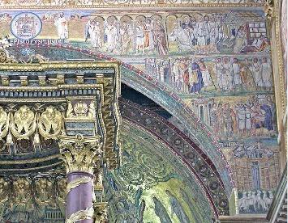
An empty jeweled throne on which sits the True Cross constitutes its central image. The throne symbolizes the Church’s anticipation of the Apocalypse at the end of time. Around it appear images of Saints Peter and Paul and, as well, the four Evangelists. Scenes from the New Testament emerge on each side: the Annunciation, the Presentation on the left, and on the right, the Massacre of the Innocents and the City of Jerusalem.
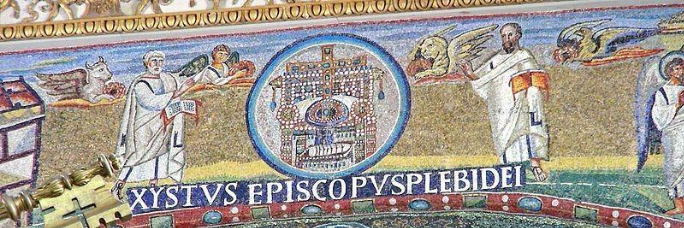
Pope Nicholas IV added the transept at the end of the 13th century.
The 18th century high altar, a “papal altar”, stands beyond it, reserved for the celebration of Mass by the pope. The porphyry and gilded bronze baldacchino originate from the same period. The altar consists of porphyry urn which holds the relics of the apostle St. Matthias who, according to the Acts of the Apostles, was chosen to replace Judas.

Its Confessio, the open devotional crypt in front of and below the high altar, has two staircases on each side and polychromatic marble flooring below. In a silver reliquary are five pieces of wood venerated as the Holy Manger (Sacra Culla) where the infant Jesus lay after his birth. Created by Luigi Valadier, the reliquary has the form of a soup tureen with a figure of the Holy Child at the top.

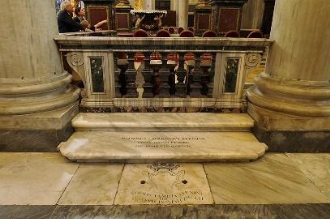
Gian Lorenzo Bernini’s surprisingly almost unnoticeable tomb lies on the floor to the right side of the high altar. Covered with a simple marble slab on which rests the family coat of arms an inscription reads, “Nobilis familia Bernini hic resurrectionem expectat” (“Here the noble Bernini family awaits the Resurrection”). On a step nearby another brief inscription, his own short epitaph, states very modestly that “Ioannes Laurentius Bernini, decus artium et Urbis, hic humiliter quiescit (“Gian Lorenzo Bernini, the glory of the arts and of the city, rests here humbly”).
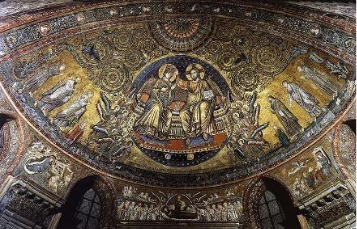
At the edge of the sanctuary stands the magnificent triumphal arch covered with 5th century, Roman-styled, mosaic images from the lives of Jesus and Mary. The panels include the enthronement of Christ surrounded by a court of heavenly court of angels, Coronation of Mary, and Adoration of the Three Magi.

The wooden ceiling of the sanctuary, different from that of the nave, simple and straightforward, lies above, coffered and painted with multi-colored starbursts of different geometric types. One part of the 13th century central apse mosaic, especially famous, highly unusual, and comparable in beauty to the mosaics of Ravenna, depicts the Coronation of the Virgin. It was executed and 1280 by Jacopo Torriti, a Franciscan friar whom Pope Nicholas IV summoned to the City from his work at the basilica of St. Francis in Assisi. Ordinarily in a Pantokrator image, Christ is depicted alone. Here, however, he appears with Mary and shares with her a single throne and royal cushion, as he crowns her Queen of Heaven.

The image exalts Mary above all the created order, as the inscription states: “Exaltata est sancta Genitrix super choros angelorum ad celestia regna” (‘exalted above the choir of angels to the heavenly kingdoms’).
Mary appears to share the same size and enjoy equal importance as Jesus. Above these sits an image of a curtain, symbol of the hidden presence of God the Father and below, the image of the River Jordan, symbol the life imparted at baptism. On the arch of the apse mosaic appears another life symbol, two vines bearing various kinds of fruit and, as well, the twenty-four elders of the Book of the Apocalypse and the symbols of the four Evangelists. The mosaics on the walls of the apse include panels with scenes from the life of Mary: the Annunciation, Nativity, Dormition, Adoration of the Magi, and Presentation in the Temple.
The19th century baptistery once served as the Chapel of the Winter Choir but later converted by Pope Leo XII to its current use.

Its font, a porphyry basin, comes from the Vatican Museums, set below floor level and approached by three circular steps. The center of its lid supports a gilded bronze statue of St John the Baptist designed by Giuseppe Valadier.

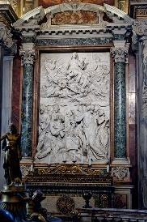
Pietro Bernini, the father of Gian Lorenzo, carved the altarpiece, a marble bas-relief of the Assumption, regarded as his masterpiece and which took four years to complete. Some believe that Gian Lorenzo, a teenager, helped sculpt the angel figures holding up the Blessed Mother.
The sacristy consists of four separate rooms on the ground floor to the right of the basilica’s façade. Its location is highly unusual since most sacristies stand near the high altar. It contains a spiral staircase designed by Gian Lorenzo Bernini and leads to the Room of the Popes (Sala dei Papi) on the floor above. The sacristy possesses an unusual relic, a tunic stained with blood, of the English Saint, Thomas Becket.
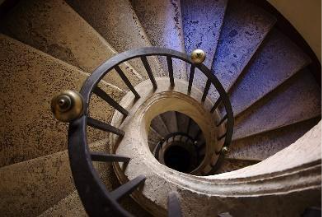
Cardinal Felice Peretti, later Pope Sixtus V commissioned the Sistine Chapel (Blessed Sacrament Chapel) in 1584, designed by the architect Domenico Fontana and shaped in the form of a Greek cross. It features short wide arms and a central dome.

In the right arm lies the tomb Sixtus V, the 16th century pope for whom the chapel is named and very famous for the modern urbanization of the City.
One of his great achievements includes the construction in 1586 of a new aqueduct, named for himself, “Aqua Felice” (his birthname).

The left arm contains the tomb of Pope St. Pius V. He was the first pope elected after the Council of Trent and strongly supported its reform decrees. In his six-year papacy he published the Catholic Catechism, reformed the Roman Missal and revised the Divine Office.
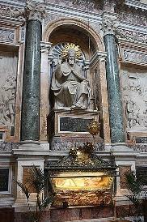
Altar and tabernacle sit in the center with the confessio in front. The chapel is richly decorated, the first major example in the City of the use of Baroque elements. The Confessio in front of the altar serves as the Oratory of the Nativity and contains 13th century crib figures by Arnolfo di Cambio, fragments of a Nativity once located under the high altar of the Basilica. The bronze tabernacle in the form of a model of the chapel upheld by four angels dominates the altar with its Cosmatesque details. An empty podium with steps behind the altar serves as a papal throne.
Remains of St. Jerome, author of the Vulgate Bible and a Doctor of the Church, were buried near here in the old church but the actual location of these has been lost to the record.
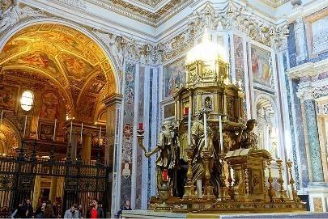
The dome’s drum contains eight large windows and pediments. The four vaults of the chapel’s arms display frescoes whose theme is the Old Testament ancestry of Christ described in the genealogy of the Gospel of Matthew.

Located on the left side of the church directly across from the Sistine Chapel on the other side of the church sits the Pauline Chapel (Borghese Chapel), created in 1611 by the Borghese pope, Paul V and designed by Flamini Ponzio. The space serves as a mortuary chapel for (Popes Paul V and Clement VIII) and for the Borghese family as well.

The overall design is virtually identical to that of the Sistine Chapel on the other side of the church. At each side of the entrance there sit two chapels: on the right that of St. Charles Boromeo and on the left that of St. Frances of Rome. The 18th century altar in the form of a Roman sarcophagus consists of gilded bronze, red marble and alabaster with two pairs of columns designed by Cavaliere d’Arpino.
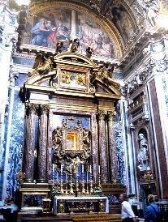
The chapel enshrines here since 1616 the highly venerated Marian icon, perhaps the City’s oldest Marian image, the Salus Populi Romani . According to legend, St. Luke, the Gospel writer painted it on the wooden table of the Holy Family in Nazareth.
Tradition also has it that Pope St Gregory I (Great) carried the icon in procession through the City a severe epidemic. St. Michael the Archangel appeared standing on the top of Hadrian’s and sheathed his sword when he saw the procession signaling that the epidemic had come to an end and the City spared.

Pope Francis had a special devotion to this shrine and visited it immediately after his election as pope and very frequently throughout his papacy.
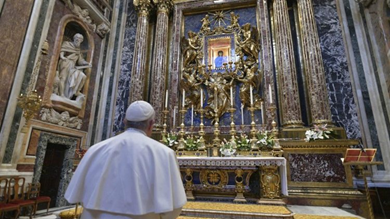
Before his death in May, 2025, he made it known that he wished to be buried in the church and near the shrine. His simple tomb sits now in a small space next to the chapel.

A colorful floor design centers on coat of arms of Pope Paul V. Two papal memorials in the chapel share a very similar design with those in the Sistine Chapel: the tomb of Pope Clement VIII on the right, and opposite it, that of Pope Paul V. Paul V provided the funds necessary to complete the construction of St. Peter’s Basilica, although he had died five years before its completion and consecration in 1626. Guido Reni painted frescoes over both tombs.
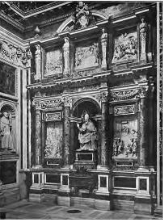
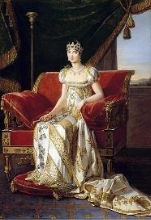
The Borghese family crypt lies under the chapel where the bodies of the two popes (Clement VIII and Paul V) lie. Pauline Bonaparte, Napoleon’s sister, is interred here too because she had married into the Borghese family.
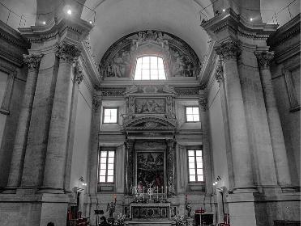
The Sforza Chapel, almost entirely white in color, exhibits a very different style than the Sistine and Pauline. The design shows a reversed Latin cross. Its columns are of travertine limestone. The sanctuary contains an altar aedicule with two Corinthian columns. Its designer was once thought to be Giacomo della Porta, but many today believe instead that Michelangelo designed it one year before his death. Some of its spatial features look ahead to the age of the Baroque.
A memorial erected by Pope Clement VIII to commemorate the 1593 conversion to Catholicism of King Henry IV of France stands in a nearby courtyard. The king made the oft quoted quip that ‘Paris was worth a Mass.’ The highly unusual design of the monument consists of the Abraham Stiller crossbeams shaped like cannons with a sign at the base which employs another equally, well-known, historical quote from the age of the Roman Emperor Constantine, ‘in hoc signo vinces’ (‘in this sign will you conquer’). Outside at the apse end of the church stands a forty-eight foot Esquiline obelisk, created in the era of Emperor Domitian and a twin to the one on the Quirinal Hill both of which are spoils from the Mausoleum of Augustus.

It rests on the same line of vision as the obelisk in front of the church of Trinita de’ Monti atop the Spanish Steps.
