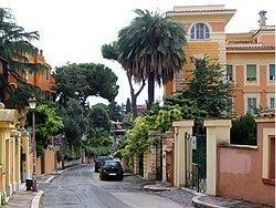
Of Rome’s seven hills, the Aventine, the southernmost, stands out as the most attractive and the one closest to the Tiber River. In the myths of Rome’ founding, the divinely sired Romulus and Remus contest with one another by means of augury over the right to establish a new colony.
Remus set up his post on the Aventine and Romulus on the Palatine. Each observed auspicious birds (aves), signs of divine approval, but Remus saw six while Romulus spotted twelve. Romulus founded the City on his site at the Palatine. Tradition has it that Remus, killed by his brother in a border dispute, lies buried on the lower side of this hill. Its name, Aventine, possibly originated from the Latin term, aves (birds). Because not enclosed within the sacred boundary of Romulus (pomerium), Romans never thought of the Aventine as part of the City’s original foundation. According to ancient legend, Sabines once occupied part of the hill. Their king, Titus Tatius, co-ruler with Romulus after the Circus Maximus rape of Sabine women, says the legend, lies buried here on its slope.
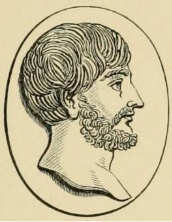
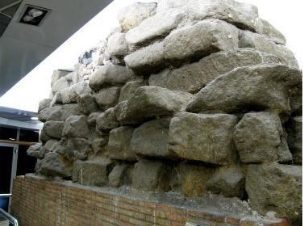
Titus co-ruled the City with Romulus after the Sabine peace. The hill became incorporated into City only when its 6th king, Servius Tullius, constructed the Servian Wall, named in his honor.
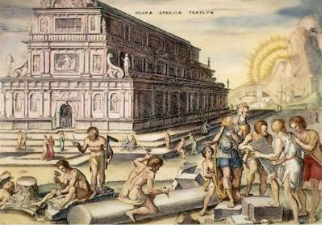
Initially the Aventine with its two parts separated by a valley was home mostly to non- Romans, plebeians (plebs), foreigners, and merchants. A law enacted in 416 BC conferred the hill to the plebeians and incorporated it into the pomerium (religious boundary) of the City after which Romans spoke of it as the “hill of the people”. The Hill played an important role during 5th century BC Secession of the Plebs under Mennius Agrippa. The Secession of 409 BC resulted in major political gains for the plebeian class including the right to elect a Tribune of the People. When the plebs moved gradually to the area of Trastevere the Aventine became an aristocratic area in the Augustan Age, populated with villas and extensive gardens. The Hill also functioned as a kind of staging process for the gradual incorporation of foreign cults into the religious life of Rome. In the monarchic period, for example, a temple to Diana was erected on the Hill and in the Republican era temples to Luna, Ceres, Juno Regina, Minerva, and others. During the imperial era, however, the Hill became very desirable to aristocrats who increasingly built their homes there. Trajan and Hadrian lived on the Hill before they became emperors. Emperor Vitellius owned a house there as well as the emperor Decius constructed baths there in 252 AD.
In 289 BC officials paved the Clivio dei Publicii, the principal road to the summit of the Hill and the City’s first pedestrian walkway. Caius Gracchus, the Roman tribune in 121 BC found refuge on the hill before he fled to the Janiculum Hill where he committed suicide. The German Emperor Otto III built his imperial palace here in 1000-1002. Converted into a medieval fortress and palace by the Savelli family, the Rocca dei Savelli stood in the space now dedicated to a park (Savelli), blanketed with orange trees. Honorius IV (Giacomo Savelli), the great nephew of Honorius III, and a relative of the Colonna and Orsini, reigned as pope from 1285 to 1287.
He made his residence in a palace here on the hill throughout his relatively short papacy.

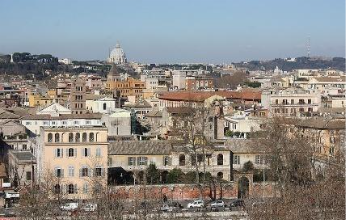
The Savelli park today provides visitors one of the best panoramic views of the City.
As a young boy Hildebrand (Pope Gregory VII) lived on the hill next door to a monastery whose abbot was his uncle. The hill remains one of Rome’s most elegant residential areas with many sites of historical, architectural, and religious interest.